Living plant profile
Red-headed Irishman
Mammillaria spinosissima
Mammillaria Cactaceae Living Herbarium Master V2 Red-Headed Irishman (Mammillaria spinosissima): Bristly Red Spines, Carmine Floral Halo and Cylindrical Stature Scientific Name: Mammillaria spinosissima Lem. Common Name: Red-Headed Irishman / Spiny Pincushion Family: Cactaceae Native Range: Central Mexico (Guerrero, Morelos, Mexico State) Mammillaria spinosissima (Red-headed Irishman) is a striking cylindrical Mexican cactus densely clad in bristly […]
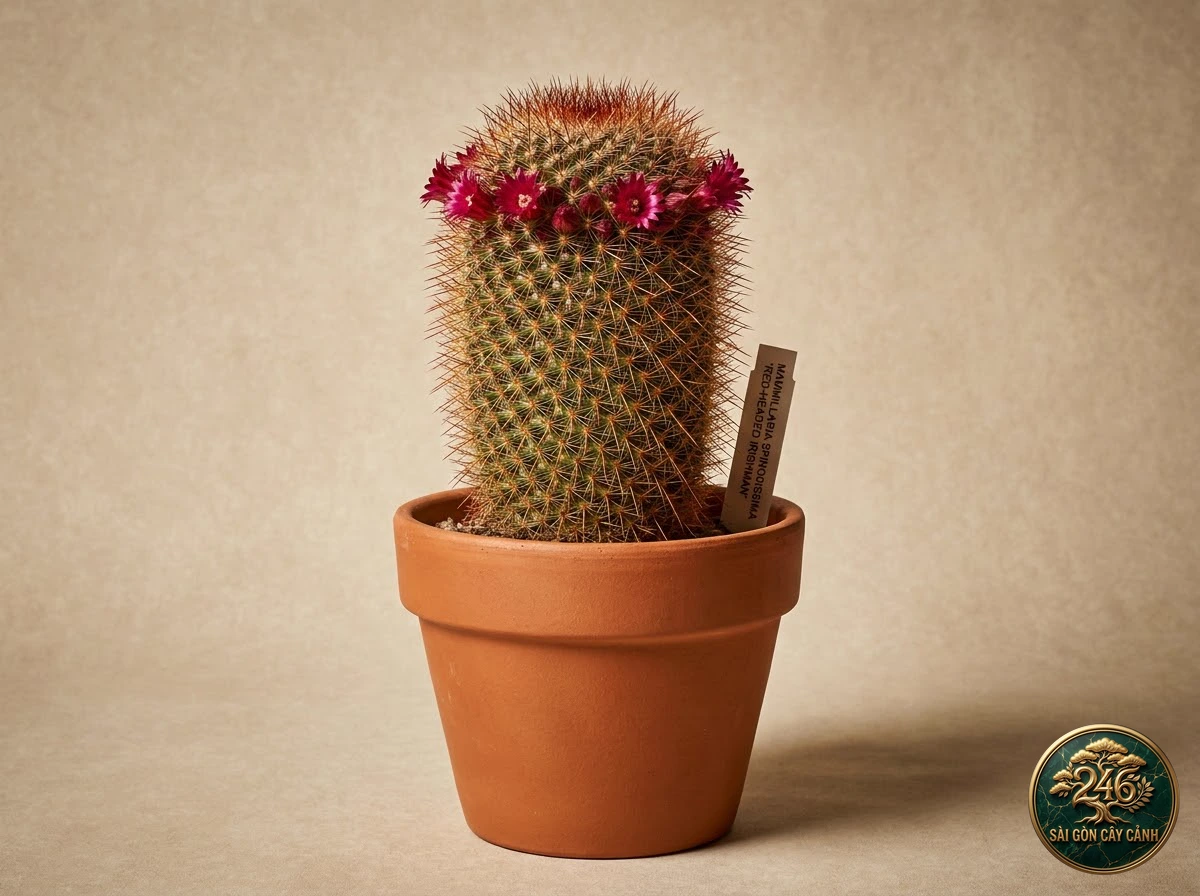
Red-Headed Irishman (Mammillaria spinosissima): Bristly Red Spines, Carmine Floral Halo and Cylindrical Stature
Common Name: Red-Headed Irishman / Spiny Pincushion
Family: Cactaceae
Native Range: Central Mexico (Guerrero, Morelos, Mexico State)
Mammillaria spinosissima (Red-headed Irishman) is a striking cylindrical Mexican cactus densely clad in bristly reddish-copper spines and encircled near its crown by a brilliant halo of carmine-pink flowers.
Sài Gòn Cây Cảnh Care Compass
1. Geographic Origin & Taxonomic Nomenclature History
Mammillaria spinosissima was scientifically published by French botanist Charles Lemaire in 1838. This distinctive cylindrical cactus is native to arid mountain slopes across Guerrero, Morelos, and Mexico State, central Mexico.
It is popularly celebrated as the Red-headed Irishman due to its erect cylindrical column sheathed in thousands of vibrant reddish-copper bristly spines encircled near its apex by a brilliant halo of carmine-pink flowers.
2. Morphological Architecture & Anatomical Specializations
Each areole bears twenty to twenty-five radiating golden-yellow radial spines surrounding four to six bristly reddish-copper central spines measuring one to two centimeters in length.
The fiery reddish-copper spine hue is driven by concentrated anthocyanin pigments that absorb harsh ultraviolet radiation while shielding apical meristems as the column elongates.
3. Photosynthetic Radiance & Urban Microclimate Dynamics
Culture demands abundant direct sunlight between 4,500 and 9,000 lux; intense solar exposure is essential to sustain fiery copper-red spine tones and trigger carmine flower crowns.
Position pots on east-facing balconies or breezy open terraces; rotate containers weekly to encourage upright symmetrical vertical growth without leaning.
4. Mineral Substrate Engineering & Fast Percolation Dynamics
Substrate architecture features 45% pumice, 25% red volcanic scoria, 15% perlite, and 15% biologically seasoned vermicompost.
Coarse mineral particles ensure rapid drainage through drain ports, keeping taproots well-aerated and eliminating anaerobic collar rot risks.
5. Biological Irrigation Protocols & Seasonal Rhythm
Hydration follows a disciplined soak-and-dry regimen: drench every ten to fourteen days during summer growth flushes only after 85-90% substrate desiccation.
During cold winter spells or prolonged rainstorms, minimize water application to maintain root rest and preserve firm cylindrical stem turgor.
6. Trace Mineral Nutrition & Slow-Release Fertility Protocols
Apply diluted organic liquid micronutrients bimonthly in spring and summer to nourish newly emerging copper-red spine crests along stem apices.
Avoid synthetic nitrogen fertilizers that stimulate weak elongated stems and cause copper spines to fade prematurely into dull grey.
7. Vegetative Propagation Protocols & Aseptic Methodology
Propagate by detaching basal offsets in spring using a sterile blade once mature specimens produce side branches.
Rest cuttings in airy dry shade for ten days until cut faces suberize firmly before inserting into moist mineral grit to establish root crowns.
8. Botanical Toxicity Profile & Contact Protocols
This red-headed pincushion cactus is entirely non-toxic and pet-safe under ASPCA veterinary botanical guidelines.
Growers only need to note that dense bristly copper needles pose minor mechanical prickle risks, warranting padded tongs during repotting.
9. Physiological Diagnostics & Integrated Pest Management
The clinical diagnostic rubric below details recognizable stress manifestations and responsive remedies for red-headed Irishman cacti:
| Clinical Symptom | Primary Root Cause | Standard Corrective Protocol |
|---|---|---|
| New apical spines emerge dull pale grey without copper-red hues | Insufficient direct solar photons to stimulate anthocyanin synthesis | Relocate to direct morning sunlight for at least 3-4 hours daily |
| Cylindrical column curves awkwardly leaning toward window | Phototropic leaning caused by uneven single-sided lighting | Rotate container regularly and transition into more balanced overhead sun |
| Basal contact zone becomes soft and waterlogged | Moisture stagnation triggering anaerobic collar rot | Unpot immediately, excise rot cleanly, dust with sulfur, air-dry 7 days, reroot in pumice |
| Mealybugs nestling beneath dense bristly copper needles | Pests exploiting dense spiny protection to tap stem sap | Target spray using pressurized diluted 70% alcohol to dislodge colonies |
10. Comparative Taxonomic Evaluation Across Allied Taxa
The comparative matrix below outlines definitive morphological traits separating Mammillaria spinosissima from neighboring cylindrical pincushion taxa:
| Species Taxon | Morphological Trait | Growth Architecture | Diagnostic Indicator |
|---|---|---|---|
| Spine Pigmentation | Vibrant coppery-red to bristly chestnut red | Dense snow-white radiating interlocking needles | Long wispy flowing white woolly hairs |
| Stem Form Factor | Erect cylindrical column reaching 20-30 cm in height | Solitary spherical globe clumping modestly | Solitary sphere wrapped in flowing white hair |
| Floral Coronet | Brilliant deep carmine-pink floral halo around the crown | Subtle creamy-pink blossoms with dark midribs | Vibrant magenta-violet floral wreath |
| Pet Safety Status | 100% pet-friendly (ASPCA Non-Toxic) | 100% pet-friendly (ASPCA Non-Toxic) | 100% pet-friendly (ASPCA Non-Toxic) |
11. Urban Landscape Architecture & Living Display Design
The fiery copper-red spine coat and carmine-pink floral halo of Mammillaria spinosissima create an arresting living focal point in contemporary interiors.
Its proud cylindrical posture infuses dynamic vitality and steadfast optimism, celebrating the boundless inventiveness of desert flora.
Nursery Care Journal & Living Greenery Moments
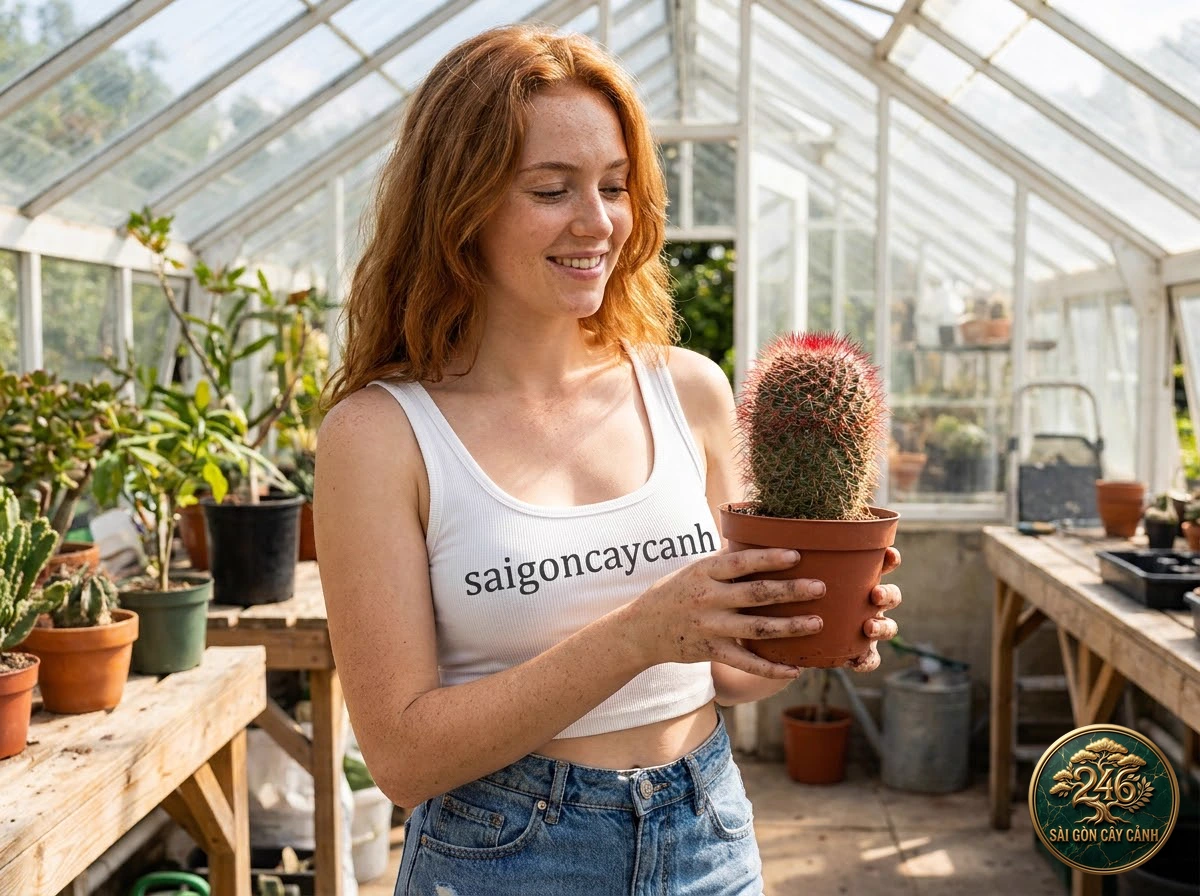
At Saigon Cay Canh greenhouse, each photograph captures genuine everyday care moments between plant lovers and living greenery, spreading a passion for nature and green-living inspiration.