
Living plant profile
Red pagoda crassula (Crassula capitella)
Crassula capitella
Comprehensive botanical monograph on the Red pagoda crassula (Crassula capitella): four-sided pagoda foliar stacking, anthocyanin crimson synthesis, and CAM physiology.
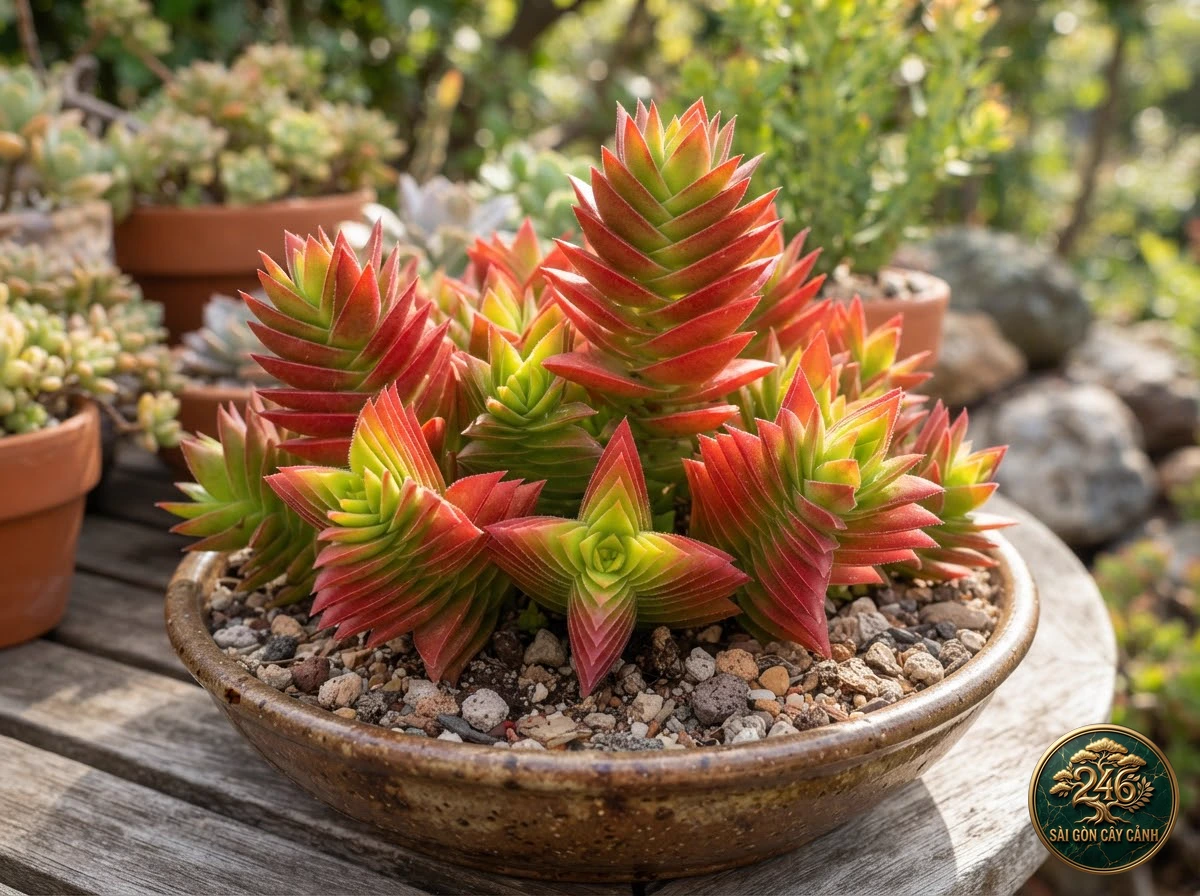
Red Pagoda Crassula (Crassula capitella)
The Red pagoda crassula (botanical binomial: Crassula capitella Thunb., celebrated globally through exceptional cultivars such as ‘Campfire’ and ‘Red Pagoda’) stands as one of the most chromatic and structurally dynamic succulents within the stonecrop family (Crassulaceae). Departing from static monochrome greens, this architectural succulent functions as a living flame in botanical landscapes. Its decussately arranged foliar tiers stack symmetrically in four vertical rows, forming spiraling pagoda-like towers that undergo a dramatic chromatic metamorphosis from lime chartreuse to blazing crimson and fiery coral under high solar irradiance.
First documented in 1778 by the renowned Swedish naturalist Carl Peter Thunberg from the arid rocky hillsides of South Africa, this taxon exemplifies superior photoprotective adaptation through massive anthocyanin pigment accumulation and nocturnal Crassulacean Acid Metabolism (CAM). In biophilic interior architecture and modern xeriscaping, it serves as a high-impact focal point, symbolizing radiant energy, vital perseverance, and modern sculptural elegance.
Sài Gòn Cây Cảnh Care Compass
1. Comprehensive Botanical Taxonomy & Key Specifications
To establish an empirical baseline for botanical researchers and horticultural practitioners, Saigon Cay Canh outlines the essential taxonomic and cultural specifications below:
| Taxonomic Descriptor / Biological Parameter | Empirical Botanical Metric & Cultural Value |
|---|---|
| Valid Botanical Binomial | Crassula capitella Thunb. (Nova Acta Phys.-Med. Acad. Caes. Leop.-Carol. Nat. Cur. 6: 329, 1778) |
| Standard International Common Names | Red pagoda crassula, Campfire crassula, Pagoda stonecrop |
| Taxonomic Rank (Family / Genus) | Crassulaceae (Stonecrop family) / Genus Crassula |
| Native Geographical Range | Succulent Karoo, rocky hillsides of Eastern Cape and Free State, South Africa |
| Growth Habit & Stature | Decumbent to ascending succulent subshrub, spreading 15-25 cm in height |
| Foliar Structure & Arrangement | Oblong-lanceolate, decussately stacked into geometric four-angled spiraling pagodas |
| Photosynthetic Flux Density Need | Abundant direct morning sunlight (4,500 – 9,000 lux) for anthocyanin synthesis |
| Companion Animal Safety Status | Certified non-toxic to domestic canines, felines, and avian companions (ASPCA certified) |
| Engineered Substrate Composition | 65% porous mineral aggregate (pumice, perlite, lava rock) + 35% washed organic fiber |
The taxon displays wide morphological diversity across its native range, with subspecies thyrsiflora exhibiting the most compressed foliar stacking and geometric precision. In our nursery conservatory, each clone is cultivated under high light fluxes to achieve peak crimson coloration prior to distribution.
2. Morphological Diagnostic Keys & Foliar Anatomy
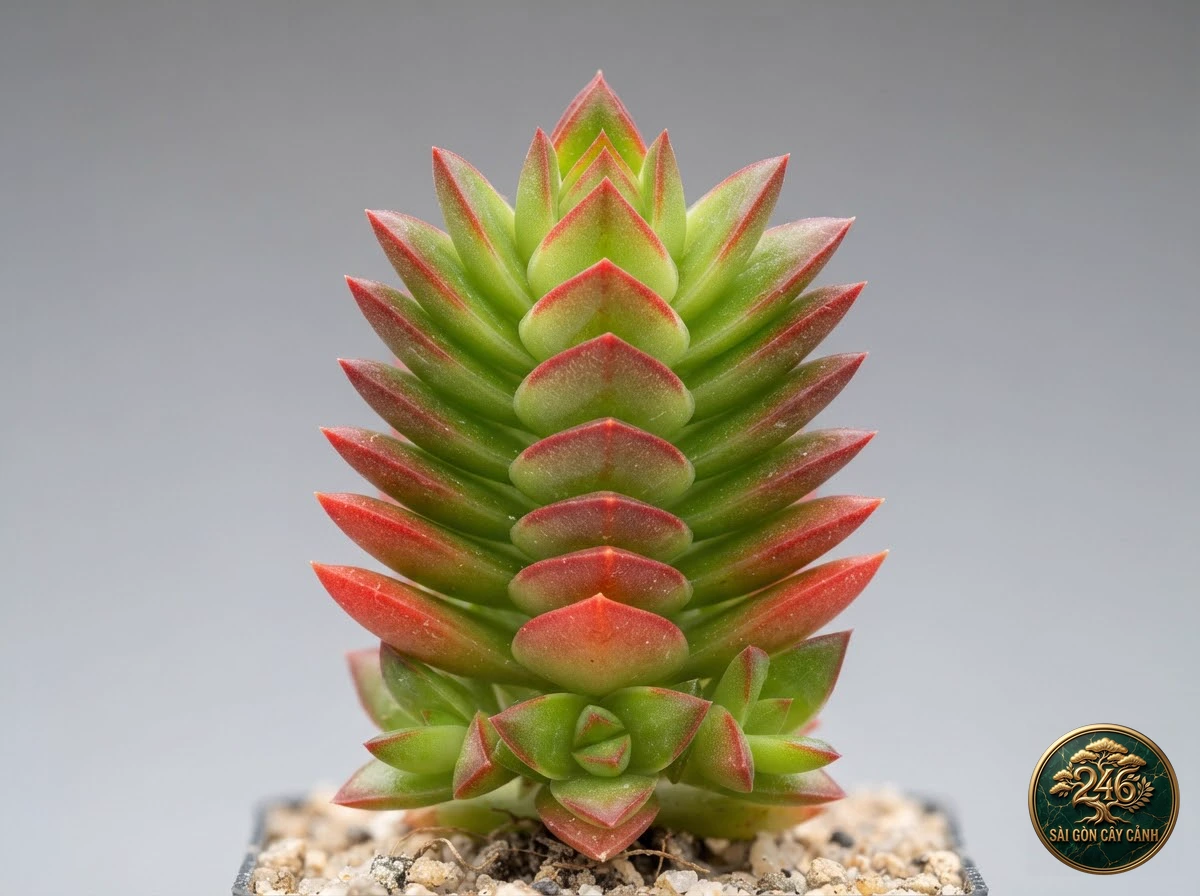
Examining the structural morphology of this stonecrop reveals an extraordinary architectural symmetry combined with specialized photoprotective pigments:
Pagoda-Like Foliar Architecture: The leaves are smooth, fleshy, oblong-lanceolate, measuring 2 cm to 5 cm in length. Clasping the central stem securely, they are arranged in strict decussate phyllotaxy, where each successive opposite pair rotates at right angles to the pair below. As the stem ascends, leaf dimensions gradually decrease toward the apex, forming a tapered, four-sided square pyramid closely resembling classical oriental pagoda architecture. The sprawling basal branches form an interconnected thicket of fiery mini-towers.
Anthocyanin Synthesis & Chromatic Metamorphosis: When grown in shaded, moisture-rich settings, the foliage remains apple-green or lime-yellow. However, exposure to intense natural sunlight paired with diurnal thermal swings triggers a massive surge in anthocyanin flavonoids (primarily cyanidin glycosides). This red pigment blanket serves as biological sunscreen, protecting underlying photosynthetic reaction centers from ultraviolet photo-inhibition. The fiery red patina spreads from the leaf margins to saturate the entire blade, turning the plant into a living flame.
Stem Development & Vegetative Spreading: The fleshy, reddish-green stems initially grow upright before becoming decumbent along the soil surface. Where stem nodes contact moist gravel, adventitious rootlets emerge, allowing the clone to expand into wide mats before the terminal shoots ascend vertically to capture sunlight.
Inflorescence & Terminal Flowering: In late summer or autumn, mature terminal rosettes elongate into erect, spicate thyrse inflorescences measuring 15 cm to 30 cm in height. The inflorescence bears dozens of minute, star-shaped, five-petaled blossoms in pure snowy white or delicate pinkish hues. These pristine starry flowers offer breathtaking contrast against the crimson foliage while exuding a sweet honey aroma. Although the flowering stem naturally senesces following seed development, vigorous lateral plantlets promptly erupt from basal dormant nodes to continue the plant’s life cycle.
3. Botanical Taxonomy & Nomenclatural History
The formal botanical cataloging of this taxon traces back to the pioneering exploration of South Africa’s Cape flora by Carl Peter Thunberg, a disciple of Linnaeus. In 1778, Thunberg published the initial diagnosis in the Nova Acta of the Leopoldina Academy under the binomial Crassula capitella. The genus Crassula denotes foliar thickness, while the specific epithet capitella derives from Latin for “small heads”, descriptive of the compact terminal flower clusters crowning the floral stems.
Within the APG IV system, the species is placed in family Crassulaceae, order Saxifragales. A comprehensive taxonomic revision by South African botanist H.R. Toelken in 1977 established three recognized subspecies: subsp. capitella, subsp. enantiophylla, and subsp. thyrsiflora, delineated by inflorescence branching patterns and foliar geometries.
In modern horticulture, the internationally acclaimed cultivar ‘Campfire’ (derived from subspecies thyrsiflora) has garnered widespread recognition, including the prestigious Award of Garden Merit from the Royal Horticultural Society (RHS), celebrating its unparalleled color performance and landscape versatility.
4. Native Ecology & Crassulacean Acid Metabolism (CAM)
Wild populations inhabit the semi-arid succulent thickets, sandstone ridges, and dry rocky slopes of South Africa’s Eastern Cape, KwaZulu-Natal, and Free State. In this habitat, annual precipitation averages merely 200 mm to 400 mm, falling unpredictably between intense dry spells on thin, skeletal soils.
To endure prolonged solar radiation and acute moisture deficits, the species employs an optimized Crassulacean Acid Metabolism (CAM) carbon pathway. By maintaining sealed stomata during daylight hours, the plant entirely prevents transpirational dehydration through its thick, waxy foliar cuticles.
At night, when ambient temperatures drop, stomata open to capture atmospheric CO2. The enzyme PEPC catalyzes the conversion of CO2 into malic acid, which is safely stored inside central foliar vacuoles until morning. Daylight drives the light-dependent reactions of photosynthesis, decarboxylating stored malic acid internally to fuel the Calvin cycle via RuBisCO without requiring daytime gas exchange. Combined with anthocyanin ultraviolet screening, this nocturnal physiology enables the plant to thrive across arid terrain.
5. Photosynthetic Irradiance & Red Pigmentation Mastery
Light intensity is the primary driver of both structural compactness and brilliant crimson coloration in this succulent. While many succulents tolerate filtered light, the red pagoda crassula demands intense photon flux densities between 4,500 and 9,000 lux to unlock its vivid color potential.
Locate specimens in eastern or southeastern exposures receiving 4 to 6 hours of direct early morning sunlight daily. Morning rays deliver rich UV and blue wavelengths that trigger anthocyanin pigment accumulation without generating destructive leaf-surface temperatures.
When grown in low-light environments receiving under 2,500 lux, the crimson hue fades rapidly to dull green within two weeks, accompanied by internodal stretching and loss of pagoda geometry. In sun-deprived urban interiors, install full-spectrum 4000K LED horticultural lights positioned 20 to 30 cm above the canopy for 8 to 10 hours daily to sustain peak fiery coloration.
6. Hydraulic Dynamics & The Soak-and-Dry Protocol
Given its specialized CAM biology and vast internal hydrenchyma storage, the red pagoda crassula is exceptionally drought-hardy. Conversely, stagnant moisture around the roots causes rapid root rot and dilutes foliar anthocyanin concentrations, washing out its signature red coloration.
Adhere strictly to the soak-and-dry irrigation protocol. During the warm growing season, apply water only after the entire substrate has remained completely dry for two to three days. Verify dryness by inserting a clean wooden skewer to the bottom of the container; water only when the wood emerges bone-dry.
Bottom-watering is the safest method: place the container in a shallow water tray for 10 to 15 minutes, allowing capillary uptake to hydrate the roots while keeping the dense foliar axils completely dry. Avoid overhead sprinkling during warm midday hours, as trapped water droplets act as magnifying lenses that burn tender tissues and invite bacterial soft rot.
7. Granular Mineral Substrate Formulation & Aerobic Porosity
In its South African homeland, the species anchors in porous decomposing sandstone detritus that dries swiftly after sporadic rainfall. Cultivating the plant in containers requires a gritty, highly aerated growing medium that prevents moisture stagnation.
The standardized blend engineered by Saigon Cay Canh features 65% coarse inorganic mineral components (35% horticultural pumice sized 3-5 mm, 15% expanded perlite, 15% crushed red lava scoria) blended with 35% sterile organic matter (20% triple-rinsed coco coir fiber and 15% sieved organic vermicompost).
This open aggregate structure allows irrigation water to drain through bottom drainage holes in moments, while maintaining rich oxygen tension throughout the root zone. Ample rhizosphere oxygen suppresses anaerobic water-mold pathogens like Pythium. Maintain substrate pH between 6.2 and 6.8 to support efficient uptake of phosphorus and potassium, two essential macronutrients that promote anthocyanin pigment biosynthesis.
8. Thermal Tolerances, Ambient Humidity & Airflow Dynamics
The red pagoda crassula thrives across a temperature range of 16°C to 30°C. Notably, it flourishes under pronounced diurnal temperature swings (warm days around 26°C paired with cool nights near 17°C). This thermal contrast sharply accelerates anthocyanin synthesis, deepening the fiery red hue.
Cold tolerance extends down to approximately 5°C, provided the potting medium is kept thoroughly dry. Sub-zero temperatures combined with wet substrate cause aqueous parenchyma cells to rupture, resulting in irreversible stem collapse.
Maintain relative humidity between 40% and 65%. High humidity coupled with stagnant air predisposes the tight leaf folds to powdery mildew. Provide consistent, buoyant airflow: gentle air circulation dries moisture droplets, prevents foliar heat buildup during sunny afternoons, and supplies fresh ambient CO2 for nighttime CAM carbon capture.
9. Clinical Diagnostics & Plant Pathology Matrix
Use this verified clinical diagnostic matrix to identify and remediate cultural disorders in the red pagoda crassula:
| Observable Clinical Symptom | Underlying Pathology & Etiology | Curative Horticultural Protocol |
|---|---|---|
| Foliage fades from fiery red to pale green; internodes stretch and pagoda tiers loosen | Insufficient natural sunlight causing anthocyanin degradation and etiolation | Gradually acclimate plant to 4-5 hours of direct morning sun over one week, or provide high-output full-spectrum 4000K LED illumination |
| Lower basal leaves turn soft, translucent, and water-soaked; base of stem darkens | Over-irrigation in heavy soil causing root rot and opportunistic bacterial soft rot | Halt watering immediately; take healthy top cuttings to propagate and save clone; discard rotten roots and replant in dry pumice grit |
| Foliar blades appear wrinkled and deflated while maintaining their deep crimson color | Prolonged moisture deficit exhausting water stored within internal hydrenchyma cells | Administer a 15-minute bottom soak in room-temperature water; foliage will regain firm turgidity within one to two days as xylem vessels rehydrate |
| White powdery fungal patches develop along leaf axils accompanied by leaf curling | Powdery mildew (Oidium) proliferation encouraged by excessive humidity and poor air movement | Move to ventilated, sunlit spot; treat affected foliage with diluted horticultural potassium bicarbonate or neem emulsion during evening hours |
Observing the vibrant coloration and firm turgor of the apical leaf tips offers a reliable measure of overall root vitality and optimal light exposure.
10. Biological Pest Management & Sanitation
Protected by its thick waxy cuticle and anthocyanin compounds, the red pagoda crassula is naturally resilient against common chewing pests. However, under sheltered indoor cultivation with low air movement, citrus mealybugs (Planococcus citri) and thrips may occasionally target tender nodal junctions.
Mealybugs lodge within the tight, overlapping crevices of decussate leaves, feeding on phloem sap and excreting sticky honeydew. At the first sign of white cottony webbing, swab the pests directly using a cotton tip moistened with 70% isopropyl alcohol. The alcohol dissolves the protective waxy coating instantly without damaging succulent tissue.
For preventative protection, apply an emulsified cold-pressed organic neem oil spray once monthly in the evening. Keep the plant in ventilated shade overnight after application to avoid foliar phytotoxicity when sunlight returns.
11. Specialized Asexual Propagation Protocols
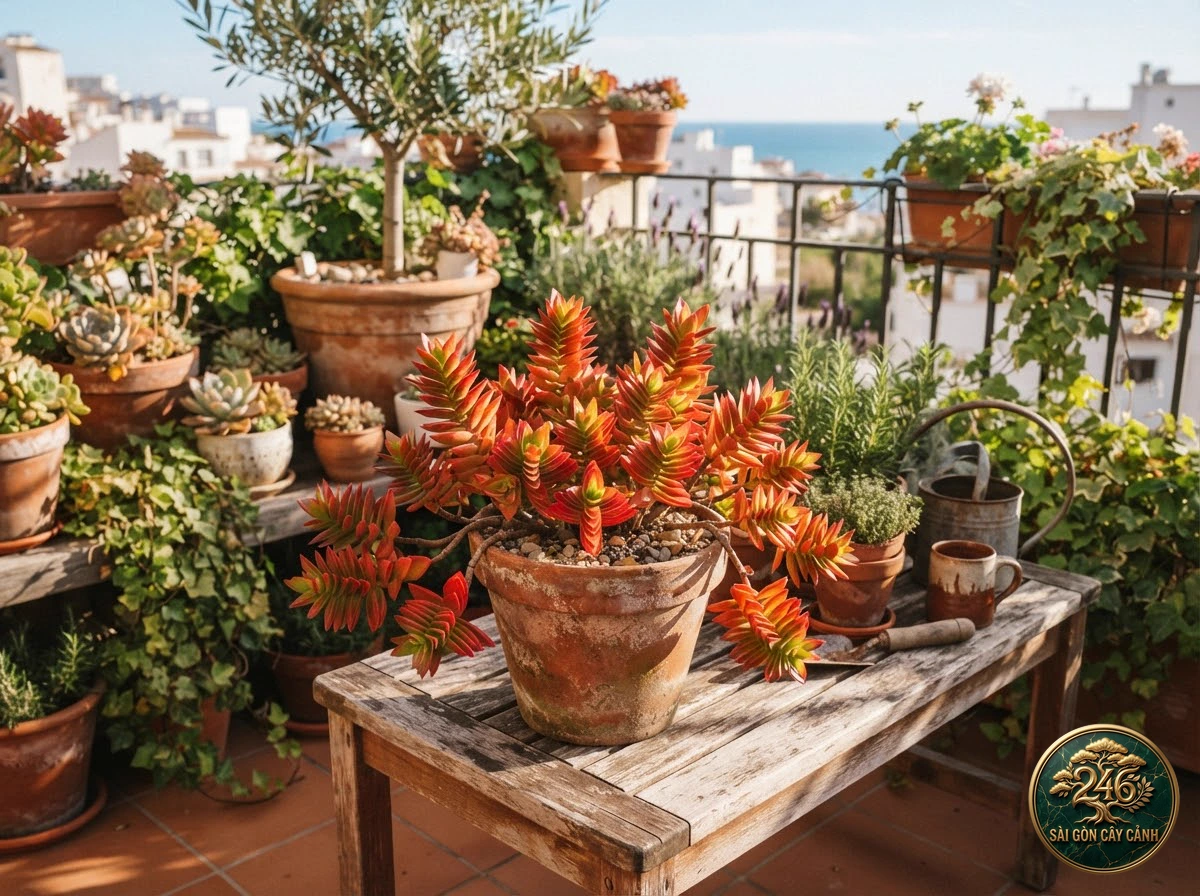
The red pagoda crassula possesses exceptional vegetative regenerative capacity, rooting readily from stem tip cuttings and individual leaf blades.
Seasonal Timing: Early spring or the start of the dry tropical season provides optimal warmth and active meristematic division for swift rooting.
Stem Cutting Procedure:
- Using a sterilized razor blade, sever a healthy, vibrant stem tip measuring 6 cm to 8 cm possessing 4 to 6 tiers of stacked leaves.
- Gently strip the lowest 1 to 2 leaf pairs to expose about 1.5 cm of clean stem.
- Allow the cutting to callus in a warm, dry, shaded location for 3 to 5 days until a firm suberized membrane seals the cut end.
- Insert the callused base into a pot filled with fine pumice or clean coarse sand. Avoid heavy watering for the initial week; instead, provide light surface misting around the pot rim. Adventitious roots form reliably within a short time.
Leaf Propagation: Gently twist mature, healthy leaves from the main stem, ensuring the basal petiole bud remains intact. Rest leaves flat upon dry mineral substrate in diffuse light; tiny plantlets and pinkish roots will emerge from the leaf base within several weeks.
12. Companion Animal Safety & ASPCA Certification
The botanical tissues contain no dangerous cardiac glycosides or caustic sap compounds. The plant is completely safe for household handling and causes no dermatological irritation during routine grooming.
Nevertheless, pet guardians should practice sensible placement. Domestic carnivores cannot digest large quantities of dense, fibrous succulent foliage. Consuming foliage out of curiosity can cause mild mechanical stomach upset accompanied by self-limiting regurgitation. Displaying specimens upon elevated shelves or sunny plant pedestals preserves specimen symmetry while maintaining a pet-friendly home.
13. Biophilic Design & Modern Interior Landscaping
With its warm fiery coloration and dramatic geometric tiers, the red pagoda crassula functions as a living botanical sculpture in modern biophilic interior design.
Dynamic Visual Accent: In minimalist interior spaces dominated by neutral tones of white, slate, and natural wood, a vibrant crimson specimen placed upon a coffee table, sunny windowsill, or kitchen island delivers vibrant natural energy and visual warmth.
Artisanal Planter Pairing: The brilliant red foliage contrasts gorgeously against matte white ceramic vessels, dark charcoal concrete planters, or unglazed terracotta containers. A decorative top dressing of black volcanic lava gravel or crushed white pumice stabilizes the root zone while highlighting the sharp geometric pagoda lines above.
14. Brand Ambassador & Saigon Cay Canh Cultivation Philosophy
At Saigon Cay Canh, we view plant cultivation as an art rooted in profound respect for botanical nature. Our artisans patiently nurture each red pagoda specimen under tropical sun to develop peak crimson hues, delivering robust and breathtaking living art to your home.

The portrait of our nursery specialist gently grooming the colorful foliar tiers with soil-dusted hands embodies our steadfast commitment to living botanical craftsmanship. We trust this resilient fiery jewel will bring vitality, warmth, and inspiration to your sanctuary.
15. Frequently Asked Questions (FAQs)
Why did my red pagoda plant turn green after I brought it home?
Fading from red to green is caused by insufficient direct sunlight and frequent watering. Without UV exposure, the plant ceases anthocyanin production. Place the pot where it receives 4 to 6 hours of direct morning sun and reduce watering frequency to bring back its brilliant crimson hue.
Does the main stem die after flowering finishes?
The flowering stem naturally senesces after seed production. This is completely natural. Simply prune the faded flower stalk; numerous new lateral shoots will promptly erupt from basal leaf axils, creating an even bushier clump.
Can I grow the red pagoda crassula in an air-conditioned room?
Yes, the plant tolerates air-conditioned temperatures (18°C to 24°C) very well, provided it receives sufficient light. If natural light is lacking, supplement with full-spectrum horticultural LED lighting for 8 to 10 hours daily.
How do I keep the pagoda leaf tiers tightly stacked?
Maintain high light levels and strictly practice soak-and-dry watering. Abundant light and controlled dry periods prevent internodal stretching, ensuring tight, compact pagoda tiers.