Living plant profile
Lavender scallops (Kalanchoe fedtschenkoi)
Kalanchoe fedtschenkoi
Comprehensive botanical monograph on Lavender scallops (Kalanchoe fedtschenkoi): structural morphology, physiological adaptations, porous mineral substrate, and specialized cultivation guidelines.
Lavender scallops (Kalanchoe fedtschenkoi)
Sài Gòn Cây Cảnh Care Compass
1. Botanical Introduction & Taxonomic Identity
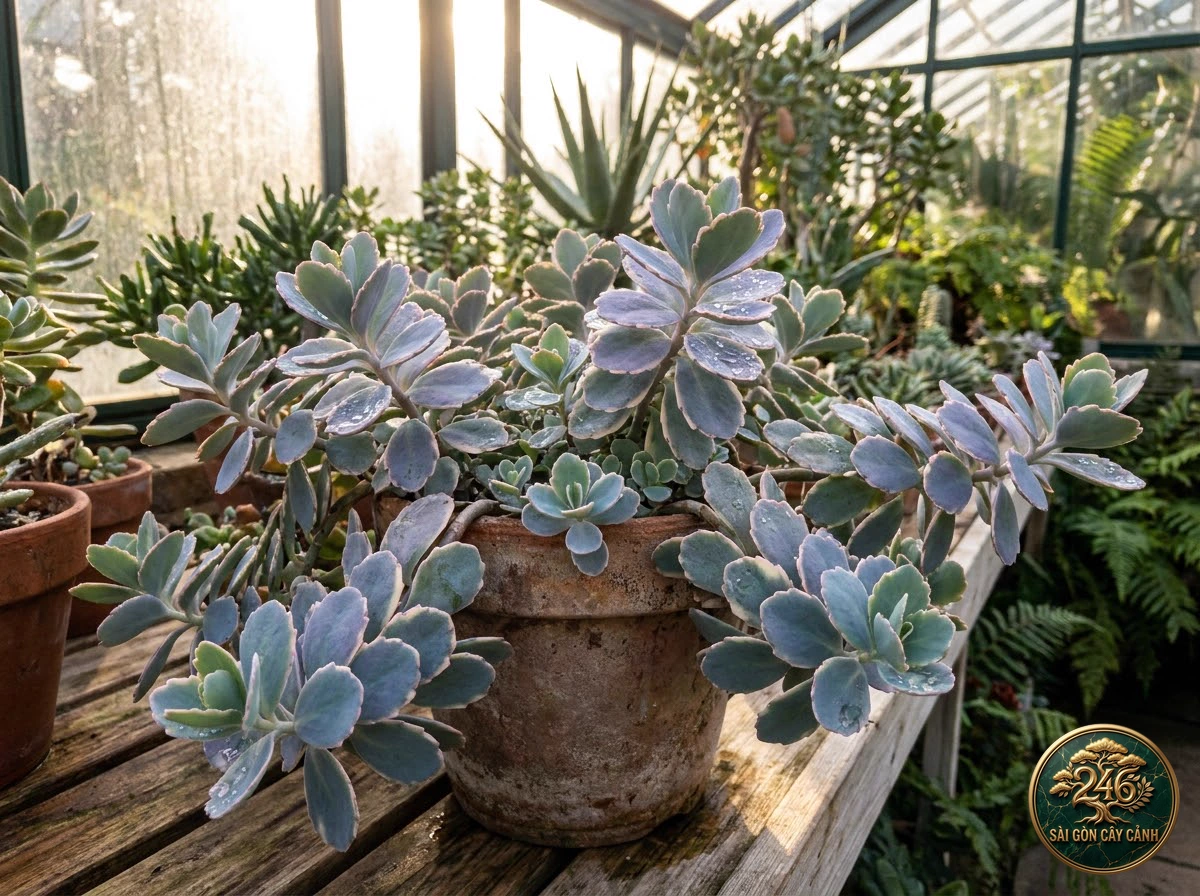
Kalanchoe fedtschenkoi, affectionately known in horticultural circles as lavender scallops, is a remarkably charming succulent subshrub endemic to the biodiversity-rich island of Madagascar. The species captivates collectors with its obovate, scallop-edged foliage that displays gently scalloped margins along the upper contours. The entire leafy canopy is washed in a luminous metallic lavender-blue to glaucous silver hue thanks to fine waxy coatings, while exposure to generous solar radiation tints the crenate edges with delicate coral-pink or plum borders. During its blooming season, slender scapes elevate pendulous clusters of bell-shaped coral-peach or salmon corollas that sway gently, introducing dynamic softness to any botanical display.
Kalanchoe fedtschenkoi was formally named in 1914 by renowned botanists Raymond-Hamet and Joseph Marie Henry Alfred Perrier de la Bathie within the Annales du Musee Colonial de Marseille, following comprehensive botanical surveys across the highlands of Madagascar. The specific epithet fedtschenkoi honors Russian botanist Boris Fedtschenko for his extensive contributions to Central Asian and Malagasy botanical science. The plant rapidly attained worldwide horticultural acclaim as a classic rockery subshrub, cherished for its metallic lavender-silver foliage and pendulous salmon-coral bell blossoms.
2. Native Habitat & Geographical Distribution
The natural distribution of Kalanchoe fedtschenkoi is intimately linked to weathered granite outcrops and rocky montane slopes across central and southeastern Madagascar, situated between 500 and 1,200 meters elevation. Unlike lowland sand deserts, these granite formations offer micro-pockets of mineral grit weathered from bedrock where rainwater evacuates almost immediately. Specimens naturally spread and cascade along rock fissures, sending adventitious roots into hairline crevices for anchorage. This montane subtropical heritage grants the plant versatile resilience, enabling it to endure dry spells as well as humid tropical episodes without structural deterioration.
Across the high plateaus of Fianarantsoa and Ihorombe, dense colonies of Kalanchoe fedtschenkoi form expansive succulent carpets over ancient gneiss formations, where coastal morning mists condensing upon foliar notches supply crucial hydration. This resilient ecological blanket anchors fragile mineral soils against wind erosion and provides rich nectar resources for endemic sunbirds and hawk moths throughout prolonged winter dry intervals.
3. Detailed Morphological Characteristics
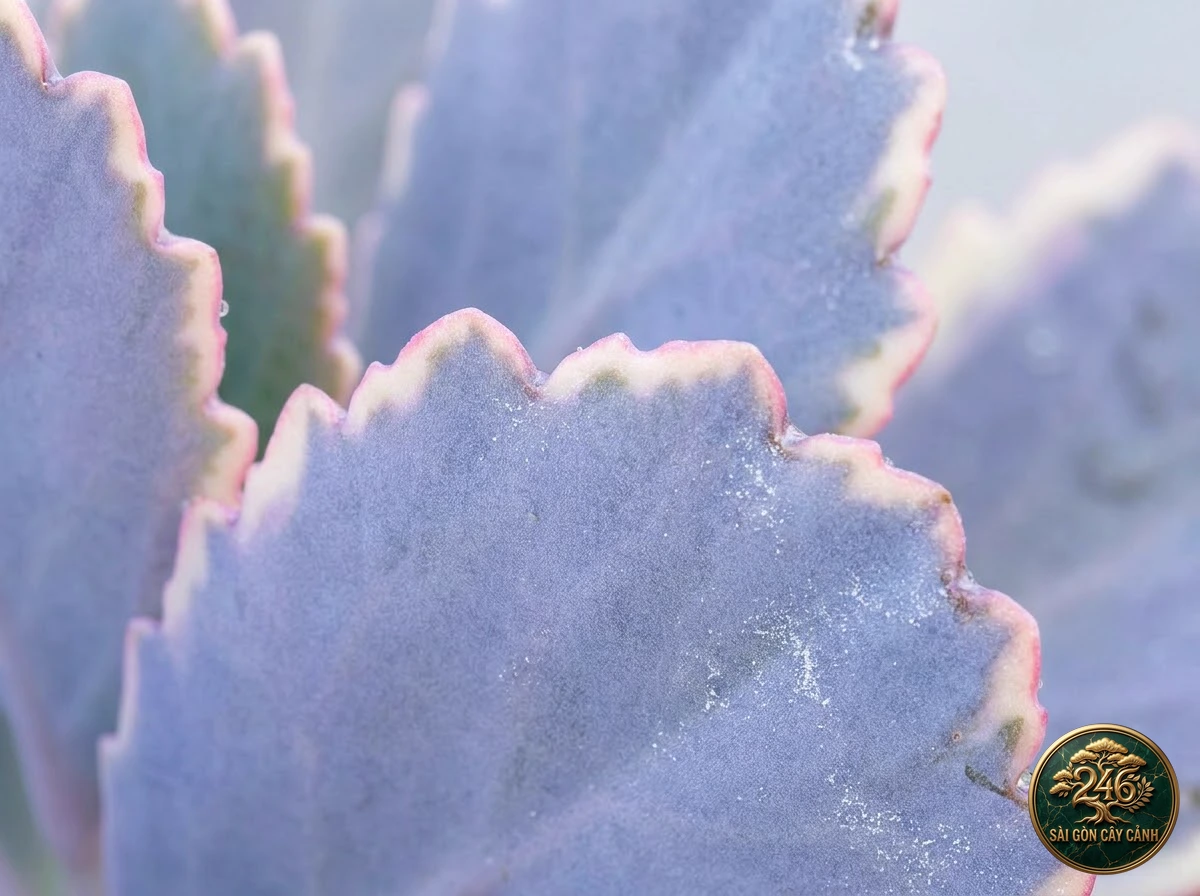
Anatomically, Kalanchoe fedtschenkoi develops into a low semi-woody subshrub reaching 30 to 60 cm in height, producing smooth, pliable stems that naturally sprawl or cascade over container edges. The opposite decussate leaves are succulent yet flexible, measuring 3 to 5 cm long by 2 to 3.5 cm wide with distinctive scalloped apical notches. A fascinating reproductive feature is latent foliar vivipary: the crenate notches harbor dormant meristematic tissues capable of sprouting miniature plantlets when shed leaves contact moist substrate. Terminal corymbose inflorescences emerge during late winter, bearing dangling lantern-like bell flowers with inflated greenish-pink calyces clasping salmon-coral corollas.
Micro-anatomical inspection of the foliar margins in Kalanchoe fedtschenkoi reveals sophisticated dormant notch meristems positioned within each scalloped indentation. Guarded by dense cuticular layers, these specialized meristematic initials remain dormant until foliar detachment. Once a shed leaf contacts moist mineral substrate, rapid redistribution of endogenous auxin hormones activates mitotic cellular division, initiating autonomous shoot buds and adventitious rootlets within a single week, exemplifying the extraordinary regenerative capacity of Malagasy succulent flora.
4. Core Botanical Matrix
Core taxonomic and cultivation parameters:
| Botanical Parameter | Observed Trait | Saigon Cay Canh Horticultural Recommendation |
|---|---|---|
| Scientific Name | Kalanchoe fedtschenkoi Raym.-Hamet & H.Perrier | Maintain certified taxonomic labeling across nursery stock |
| Plant Family | Stonecrop family (Crassulaceae) | Observe specialized succulent physiological requirements |
| Native Distribution | Weathered granite cliffs and arid montane ridges across central and southeastern Madagascar | Replicate native climatic parameters in indoor cultivation |
| Illumination Intensity | 20,000 – 45,000 lux | Bright filtered sunlight or gentle direct morning solar exposure to maintain delicate lavender-silvery foliar tones |
| Thermal Window | 18°C – 33°C | Protect against frost below 8°C and provide ventilation during heat |
| Relative Humidity | 45% – 65% | Sustain gentle atmospheric air movement to disperse stagnant moisture |
| Substrate pH | 5.8 – 6.6 | Utilize porous neutral mineral components for rapid drainage |
| Substrate Formulation | 35% white pumice, 25% mineral perlite, 15% crushed granite grit, 15% cured organic peat, 10% purified earthworm humus | Maintain coarse granular structure; avoid dense suffocating soils |
| Irrigation Strategy | Moisten substrate evenly once the top eighty percent turns dry; demonstrates superior drought tolerance with mild basal moisture preference | Enforce thorough substrate dry-down between watering sessions |
| Propagation Pathways | Rooting nodal stem fragments, collecting autonomous plantlets sprouting along the scalloped foliar perimeters | Perform during warm spring or early wet season for peak vigor |
| Veterinary Toxicology | TOXIC TO COMPANION ANIMALS (ASPCA Toxic) | Bufadienolide toxins induce acute gastrointestinal ulceration and potential cardiovascular depression in domestic pets. |
5. Toxicity Profile & Domestic Safety
In common with its botanical congeners, Kalanchoe fedtschenkoi harbors toxic bufadienolide cardiac glycosides within the cellular sap of its stems, foliage, and flowers. Ingestion by domestic canines or felines disrupts myocardial cellular electrolyte gradients and inflames the gastrointestinal mucosa. Typical clinical signs include acute emesis, frothing salivation, abdominal cramping, watery diarrhea, lethargy, and irregular cardiac rhythms. Despite its gentle appearance and smaller foliage, Saigon Cay Canh warns pet owners to exercise diligent safety measures by displaying this cascading succulent in hanging baskets or upon elevated shelves strictly out of reach of companion animals.
6. Lighting Dynamics & Photosynthetic Adaptations
This lavender succulent flourishes under generous solar radiation, ideally balanced between morning sunshine and bright dappled light. It prospers in luminous settings receiving 20,000 to 45,000 lux, particularly eastern exposures where gentle morning sun illuminates the foliage. Adequate light stimulates the enchanting lavender-blue tone and accentuates the pink-flushed margins. If exposed to unfiltered midday sun during tropical dry peaks, the leaves may scorch or turn an unappealing leathery brown; conversely, dim indoor corners trigger leggy, weak stem growth and revert the foliage to a plain, dull green without marginal blushing.
Photoperiod dynamics also directly regulate the nocturnal stomatal opening cycles of CAM physiology in Kalanchoe fedtschenkoi. Ample daytime photon flux density ensures ample carbohydrate production required to regenerate phosphoenolpyruvate acceptors after dusk, allowing sustained nocturnal carbon uptake without depleting foliar succulence.
7. Moisture Equilibrium & Irrigation Regimes
Watering protocols for Kalanchoe fedtschenkoi offer slightly greater flexibility than for thick-leaved paddle succulents, yet the core rule of substrate dry-down must be respected. Apply balanced irrigation when approximately 80% of the upper potting volume feels dry to the touch. Under tropical weather, a watering cadence of once every 5 to 7 days during dry periods maintains optimum foliar turgor. Its multi-branched growth habit transpires water slightly faster than solitary rosettes, but continuous daily drenching that creates muddy, stagnant conditions must be avoided. Ensure drainage apertures at the pot base remain completely unobstructed.
8. Substrate Architecture & Nutrition Strategy
The recommended potting formulation for Kalanchoe fedtschenkoi balances rapid mineral drainage with subtle moisture buffering: combining 35% small-grade white pumice, 25% horticultural perlite, 15% washed granite grit, 15% cured organic peat moss, and 10% purified vermicompost. This physical blend facilitates easy root penetration, prevents compaction, and maintains balanced micro-moisture that keeps the succulent foliage plump and vibrant. Substrate pH is best sustained between 5.8 and 6.6. Applying a conservative dose of balanced organic slow-release pellets every three to four months during active growth supports strong branching and bountiful flowering.
Nutritional requirements for Kalanchoe fedtschenkoi are modest yet benefit from gentle consistency during active spring vegetative growth. Maintaining pliable, cascading stems without brittleness requires adequate supplies of bio-available calcium, silica, and potassium. Avoid high-nitrogen foliar feeds that promote weak, elongated internodes and dilute the signature lavender-plum coloration. Applying diluted vermicompost tea or organic slow-release granules around the root zone once monthly during the warm growing season supports glossy foliar vitality and profuse seasonal flowering.
9. Temperature Dynamics & Aeration Strategy
The optimal thermal comfort range for Kalanchoe fedtschenkoi extends from 18°C to 33°C, harmonizing seamlessly with tropical urban temperatures. However, when ambient heat surpasses 35°C during intense summer spells, vegetative growth naturally slows down, requiring relocation to a shaded, breezy alcove. Relative humidity between 45% and 65% proves ideal. Continuous air movement not only mitigates ambient heat stress across foliage but also prevents moisture droplets from lingering inside foliar notches, eliminating potential incubators for bacterial rot.
10. Specialized Propagation Protocols
Kalanchoe fedtschenkoi is exceptionally prolific and among the easiest succulents to propagate. The primary approach utilizes stem cuttings: sever apical shoot tips 8 to 12 cm in length bearing several leaf nodes, allow cut stems to dry in airy shade for 2 to 3 days to suberize, and insert into lightly moistened mineral grit; vigorous adventitious roots develop within 10 to 14 days. Furthermore, fallen or detached mature leaves placed horizontally atop moist pumice naturally trigger the dormant marginal notches, producing tiny autonomous plantlets with self-sufficient root systems ready for potting.
11. Diagnostic Matrix & Preventative Health
Mealybugs colonizing tender shoot junctures and fungal leaf spot pathogens represent the primary maintenance challenges for Kalanchoe fedtschenkoi. When mealybugs appear, dab them directly with a 70% medicinal alcohol swab to eradicate the pests without inflicting foliar chemical burn. Should circular brown fungal lesions develop on leaves during damp monsoon stretches, remove the affected foliage promptly, move the container to an area with improved air circulation, and reduce watering frequency. Avoid late evening irrigation so that foliage does not remain wet overnight.
Clinical diagnostics and remedial actions:
| Observed Symptom | Primary Root Cause | Saigon Cay Canh Remedial Action |
|---|---|---|
| Lower leaves turn soft, thin, and wrinkled | Prolonged moisture deficit in the root medium | Provide a deep perimeter soak for Kalanchoe fedtschenkoi; tissues recover within 48 hours |
| Black soft decay at the stem base with leaf drop | Anaerobic fungal root rot due to waterlogged substrate | Unpot immediately, excise necrotic pulp, treat with sulfur powder, and repot into bone-dry pumice |
| Elongated, weak internodes with pale drooping foliage | Chronic insufficiency of direct solar radiation | Relocate Kalanchoe fedtschenkoi to receive unshaded morning sunlight for 4 to 6 hours daily |
| White cottony clusters nested in foliar axils | Foliar mealybug infestation (Pseudococcidae) | Apply 70% medicinal alcohol directly with a cotton bud to dissolve waxy insect cuticles without foliar damage |
12. Living Architecture & Interior Styling
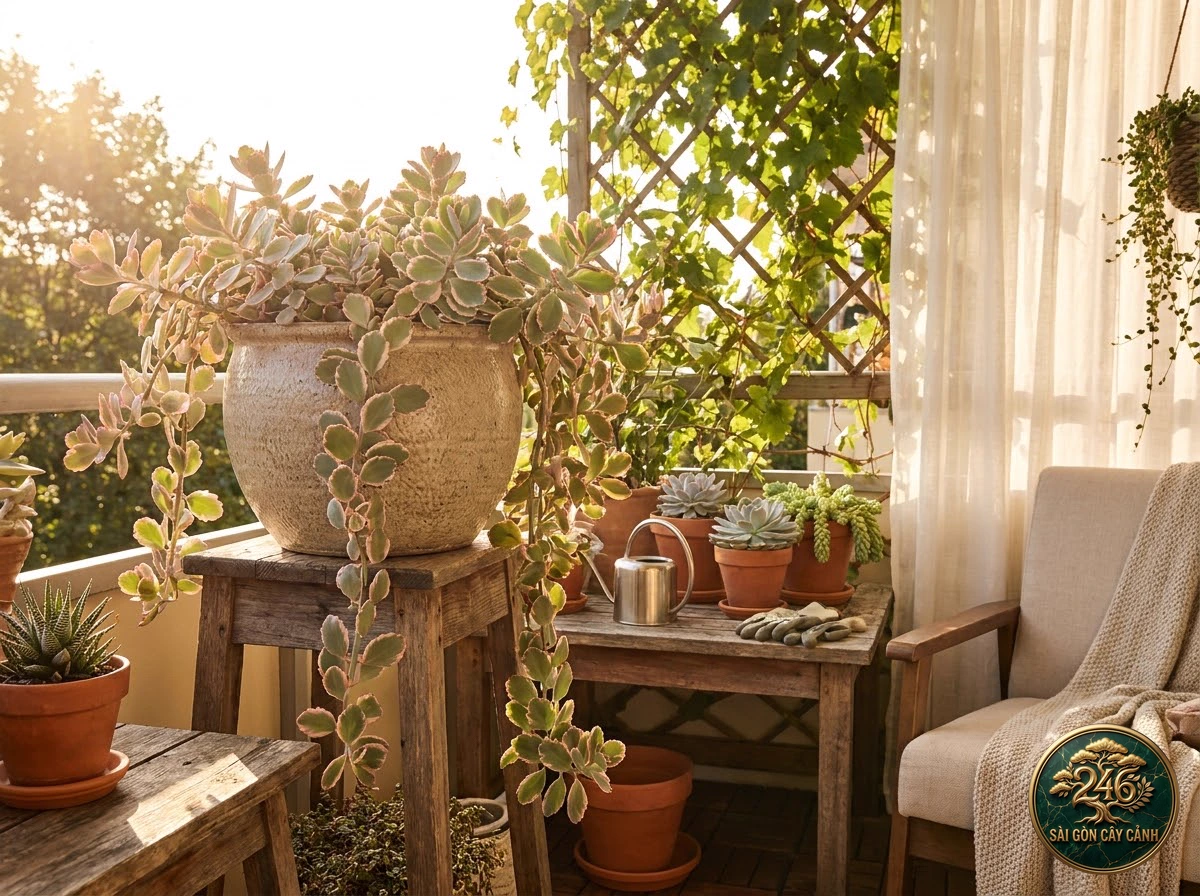
With its graceful sprawling habit and poetic lavender-silver palette, Kalanchoe fedtschenkoi makes an exquisite choice for hanging baskets on balconies, suspended verandas, or Bohemian-styled interior vignettes. The trailing stems create romantic visual rhythm as they spill over the rim of glazed turquoise pots, white composite planters, or rustic timber boxes. In mixed succulent arrangements, its soft scalloped foliage effortlessly tempers the rigid spines of upright cacti, weaving artistic harmony into the living botanical tapestry.
Featuring graceful, sprawling branches and a poetic lavender-silver palette, Kalanchoe fedtschenkoi makes an exquisite living sculpture for suspended balcony baskets, vertical green walls, or romantic Bohemian garden displays. The arching stems create soft visual motion as they trail over the rims of glazed turquoise ceramic pots, matte white composite bowls, or rustic driftwood planters. Within mixed succulent rockeries, its undulating foliage tempers the rigid spines of upright cacti, instilling harmonious visual balance and soothing natural elegance.
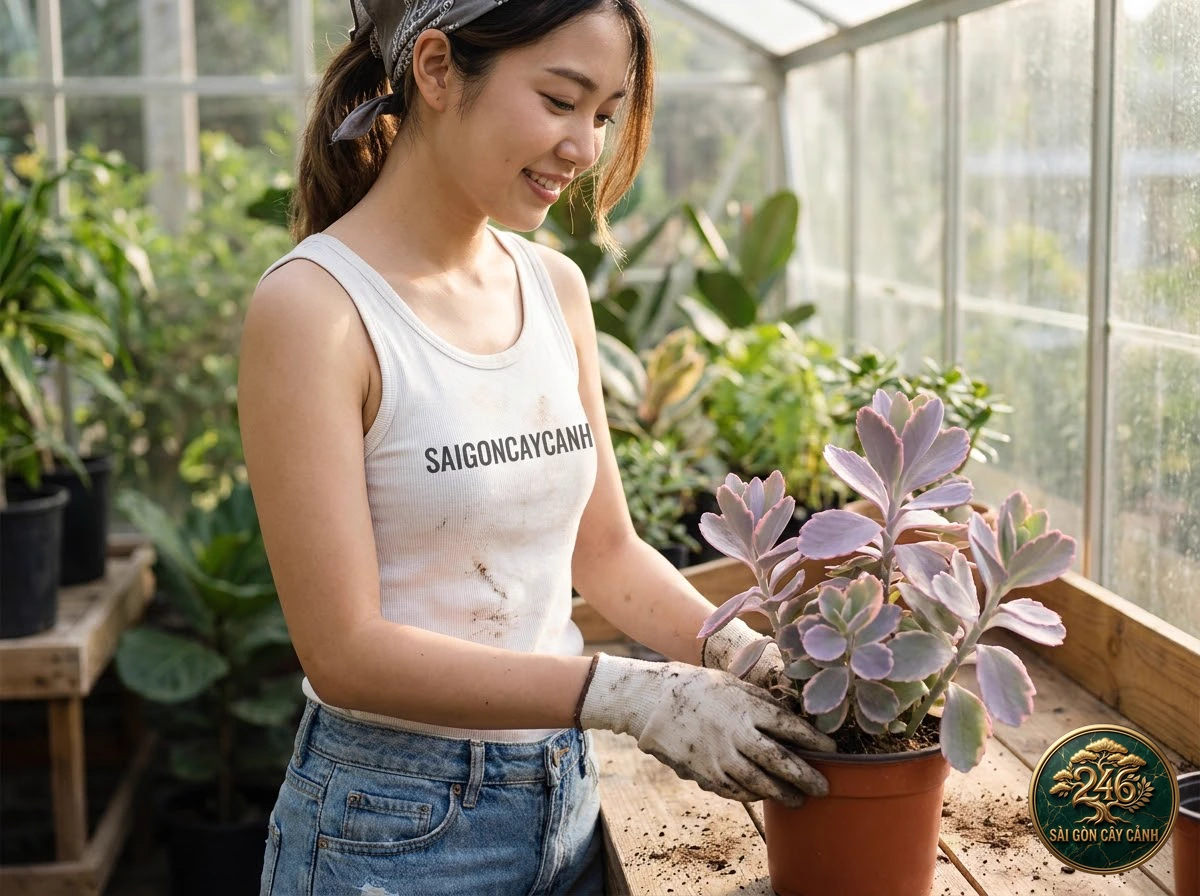
Brand Ambassador & Living Herbarium Botanical Philosophy
At Saigon Cay Canh botanical nursery, each specimen is curated and tended under the guidance of our brand ambassador, ensuring vibrant vitality and true-to-type morphology.
13. Horticultural Excellence & Living Heritage
At Saigon Cay Canh, we nurture every trailing stem of Kalanchoe fedtschenkoi to bring refined grace and serene botanical beauty into your living sanctuary. Every plant curated in our nursery is evaluated for balanced foliar turgidity, authentic lavender-pink color development, and sound root viability. We are committed to sharing specialized horticultural guidance while offering botanical specimens of the highest standard, fostering your enduring journey with the living natural world.