Living plant profile
Star cactus haworthia (Haworthia retusa)
Haworthia retusa
Comprehensive botanical monograph on Star cactus haworthia (Haworthia retusa): structural morphology, physiological adaptations, porous mineral substrate, and specialized cultivation guidelines.
Star cactus haworthia (Haworthia retusa)
Sài Gòn Cây Cảnh Care Compass
1. Botanical Introduction & Taxonomic Identity
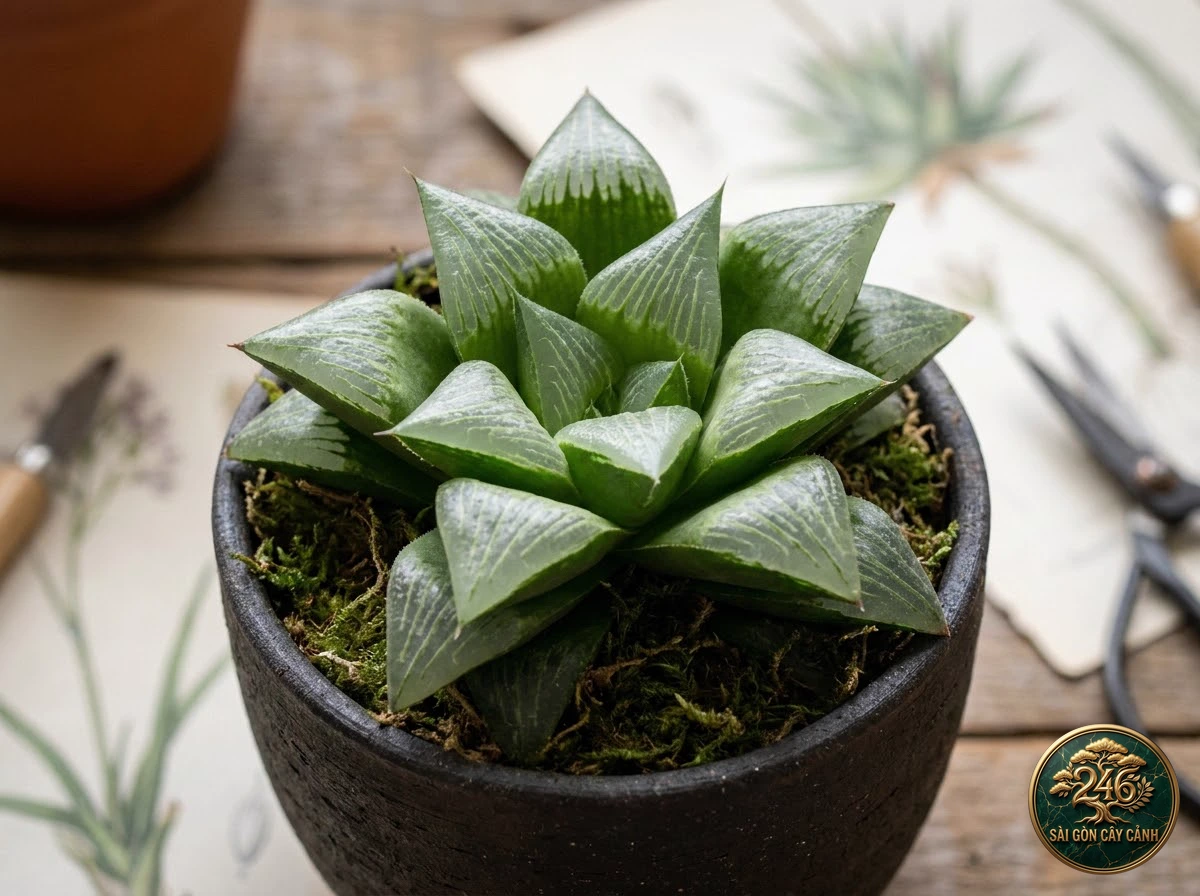
Haworthia retusa represents a pinnacle of geometric foliar adaptation within the family Asphodelaceae. The species designation retusa stems from botanical Latin denoting turned back or notched, describing its remarkable leaf morphology: rather than tapering upright, each thick succulent leaf sharply reflexes at roughly a right angle, presenting a horizontally flattened triangular facet to the sky. Viewed from above, the compact imbricated leaves compose a symmetrical, five-pointed crystalline star hugging the substrate surface. This flattened terminal plane features translucent epidermal window glass delineated by fine longitudinal dark green or brownish lines, serving as a sophisticated natural solar collector designed for subterranean living.
Haworthia retusa possesses extraordinary taxonomic pedigree, representing one of the earliest South African succulents introduced to European botanical conservatories during the seventeenth century. Carl Linnaeus, the father of modern taxonomy, formally classified it in his landmark 1753 work Species Plantarum under the name Aloe retusa. In 1809, Henri Auguste Duval transferred it to Haworthia. It stands as the designated type representative of the retuse haworthias, a specialized botanical grouping defined by sharply recurved, flat-topped leaf apices that has captivated academic botanists for over two and a half centuries.
2. Native Habitat & Geographical Distribution
The natural geographic habitat of Haworthia retusa is restricted largely to limestone hills, weathered shale outcrops, and gravelly clay flats surrounding Riversdale in the southern Western Cape of South Africa. Here, the local ecology experiences an erratic bimodal rainfall pattern with long dry intervals punctuated by maritime breezes. In habitat, retusa practices an almost completely subterranean existence: the fleshy root crown and majority of the leaf body remain submerged beneath quartz silt, aligning only the flat triangular apical windows level with the surrounding gravel floor. This cryptic strategy shields precious water reserves from grazing animals while buffering delicate cell tissues against scorching dry winds.
3. Detailed Morphological Characteristics
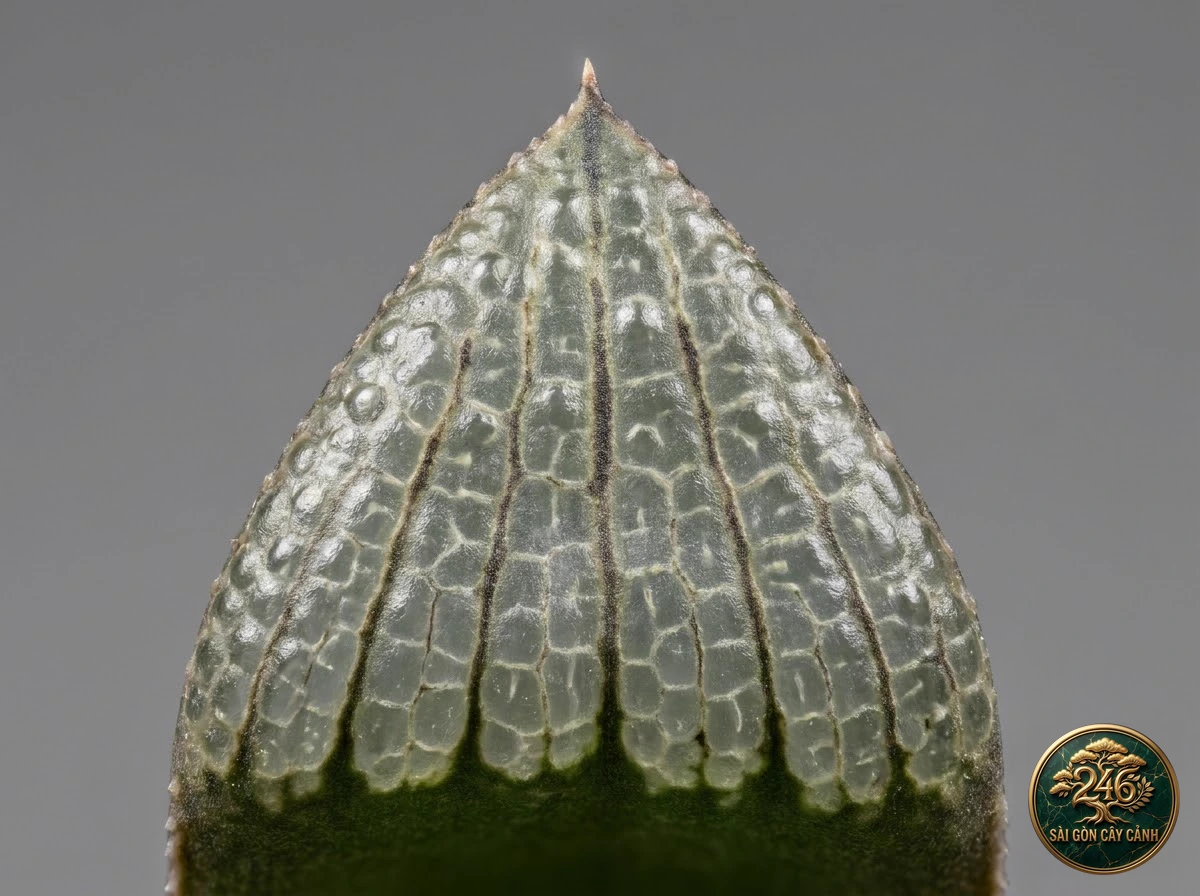
In morphological anatomy, Haworthia retusa forms solitary or slowly clumping acaulescent rosettes reaching 7 to 12 cm across. The foliage is exceptionally rigid and succulent, 4 to 8 cm in overall length, terminating in triangular flattened end-faces 2 to 3.5 cm wide. The windowed surface ranges from smooth to subtly micropapillate, bearing 3 to 7 prominent longitudinal green or chocolate-tinted window lines. The root architecture comprises massive, fleshy contractile taproots functioning as biological anchors; during severe droughts, radial dehydration of root cortical tissues exerts mechanical tension that pulls the entire rosette 1 to 2 cm deeper into the soil mantle. Inconspicuous white florets marked with faint olive-brown keystripes emerge upon erect, wiry racemes up to 30 cm tall.
The histological architecture of Haworthia retusa represents a marvel of geophytic engineering: its sharply reflexed apical plane captures solar radiation from overhead zenith angles. This terminal facet is fortified with a dense cuticular layer resistant to windborne desert silt, underlain by hypertrophied clear parenchyma cells acting as organic light collectors. As light traverses the triangular window, longitudinal pigmented lines act as optical baffles, distributing radiance evenly throughout deep subterranean chlorenchyma columns. The massive contractile taproots feature corrugated cell walls capable of contracting fifteen to twenty percent in length during droughts, mechanically pulling the crown into subterranean refuge.
4. Core Botanical Matrix
Core taxonomic and cultivation parameters:
| Botanical Parameter | Observed Trait | Saigon Cay Canh Horticultural Recommendation |
|---|---|---|
| Scientific Name | Haworthia retusa (L.) Duval | Maintain certified taxonomic labeling across nursery stock |
| Plant Family | Asphodel family (Asphodelaceae) | Observe specialized succulent physiology within Asphodelaceae |
| Native Distribution | Limestone hills and clayey flats around Riversdale in the southern Western Cape Province, South Africa | Replicate native climatic parameters in indoor cultivation |
| Illumination Intensity | 18,000 – 32,000 lux | Bright filtered sunlight or gentle direct sun; withstands higher illumination than tender-leaved haworthias |
| Thermal Window | 12°C – 27°C | Protect against cold below 8°C and provide active ventilation during heat |
| Relative Humidity | 40% – 60% | Sustain gentle atmospheric air movement to disperse stagnant moisture |
| Substrate pH | 6.5 – 7.2 | Utilize porous neutral mineral components for rapid drainage |
| Substrate Formulation | 50% medium pumice, 20% hard akadama granules, 15% zeolite grit, 10% perlite, 5% decomposed worm humus | Maintain coarse granular structure; avoid dense suffocating soils |
| Irrigation Strategy | Allow ninety percent substrate desiccation before saturating; curtail moisture markedly during midsummer heat | Enforce thorough substrate dry-down between watering sessions |
| Propagation Pathways | Separation of mature basal offsets or rooting firm, detached lower leaf wedges on dry pumice grit | Perform during warm spring or early wet season for peak vigor |
| Veterinary Toxicology | NON-TOXIC TO COMPANION ANIMALS (ASPCA Non-Toxic) | ASPCA NON-TOXIC CERTIFIED; completely harmless to domestic felines and canines. |
5. Toxicity Profile & Domestic Safety
Consistently with its taxonomic peers, Haworthia retusa adheres to the highest bio-safety thresholds for indoor horticulture. Formally certified as NON-TOXIC to cats, dogs, and horses by the ASPCA, its succulent tissues harbor zero dangerous mineral needle irritants, zero hemolytic saponins, and zero cardiac toxins. This makes it an ideal botanical choice for plant lovers who admire bizarre, sculptural succulent forms but demand absolute safety for their beloved pets without fear of punctures or poisonings.
6. Lighting Dynamics & Photosynthetic Adaptations
Regarding lighting parameters, Haworthia retusa accommodates slightly higher luminous intensity than softer-leaved species, thriving within 18,000 to 32,000 lux. Exposure to 2 to 4 hours of gentle morning sun hardens the foliar surfaces, sharpens window clarity, and imbues the leaf margins with an antique bronzed patina. Nonetheless, unshaded midday sun through glass windows during heatwaves must be avoided without vigorous ventilation, as trapped thermal radiation can overheat the dense window parenchyma and cause localized scarring.
7. Moisture Equilibrium & Irrigation Regimes
Watering strategy for star cactus haworthia necessitates disciplined restraint: soak the soil only after ninety percent dryness has been established throughout the pot. Backed by swollen contractile taproots and dense water-storing leaves, retusa demonstrates superior drought endurance. During humid, stagnant summer peaks above 33°C, plants lapse into semi-dormancy; growers should restrict watering to light rim applications every 10 to 14 days during twilight, maintaining slight deep humidity while keeping the crown completely dry.
8. Substrate Architecture & Nutrition Strategy
The substrate for Haworthia retusa requires overwhelming mineral preponderance: 50% coarse pumice (3-6mm), 20% hard-sintered akadama pellets, 15% zeolite mineral grit, 10% perlite, and a conservative 5% mature worm humus. This formula yields instantaneous water passage, closely replicating the rocky limestone scree of its native habitat and keeping fungal spores from attacking its succulent taproot neck.
9. Temperature Dynamics & Aeration Strategy
The ideal temperature envelope for Haworthia retusa ranges between 12°C and 27°C, with peak metabolic activity occurring during crisp spring and autumn days. Relative atmospheric humidity between 40% and 60% is optimal. Continuous air circulation remains paramount; gentle air currents ensure the horizontal terminal leaf facets remain free from stagnant condensation overnight, effectively preventing soft rot infections.
10. Specialized Propagation Protocols
Propagating Haworthia retusa rewards patient horticultural stewardship due to its measured metabolic pace. The preferred technique involves severing well-formed basal offsets from mature specimens. Using a sterile scalpel, detach offsets carrying established root threads, treat the wound with powdered charcoal or sulfur, and dry unpotted for 4 days before setting into gritty pumice-akadama medium. Single-leaf propagation is feasible using mature lower leaves; excising the intact basal collar is imperative, as adventitious plantlets will bud from the base within three to four weeks when maintained under warm, filtered shade.
11. Diagnostic Matrix & Preventative Health
The most severe pathological threat confronting Haworthia retusa is basal taproot rot caused by Rhizoctonia solani and bacterial soft rot under excessive warm-season moisture stagnation. If peripheral leaves become mushy, dark brown, or emit a faint fermented odor, immediately isolate the specimen, cut away all compromised root tissue with a sterile blade, bathe the crown in diluted copper bactericide, and air-cure unpotted for 10 days before rerooting in pure horticultural pumice. Preventive control relies upon never allowing water to sit upon apical windows overnight and sustaining constant air movement.
Clinical diagnostics and remedial actions:
| Observed Symptom | Primary Root Cause | Saigon Cay Canh Remedial Action |
|---|---|---|
| Terminal triangular window planes become deeply sunken and wrinkled | Water-storing parenchyma depleted by high ambient temperatures and desiccated soil | Move star haworthia to cool shade and bottom-water slowly to allow contractile taproots to absorb moisture |
| Contractile taproots split with dark basal rot creeping upward into the crown | Fusarium fungal pathogen entering root lesions under hot, stagnant waterlogging | Unpot, clear old soil, excise rot, treat with systemic fungicide, and dry unpotted for seven days |
| Triangular leaf facets lose their clear jade hue, turning scorched reddish-brown | Excessive solar radiation overheating the unshaded epidermal window lenses | Filter light through fifty-percent shade cloth or sheer curtains to temper thermal intensity |
| Subterranean root mealybugs depositing white cottony webbing on fleshy taproots | Root parasites flourishing within compacted, aged potting substrate lacking aeration | Repot into fresh pumice-rich mineral mix, wash root systems thoroughly, and amend with organic neem meal |
12. Living Architecture & Interior Styling
Featuring crisp star-like geometry, Haworthia retusa serves as an anchor specimen when planted alongside cryptic stone mimics such as Lithops living stones, Pleiospilos nelii split-rocks, and dark Haworthia bayeri. Blending the emerald triangular facets of retusa with the granitic textures of mimicry succulents recreates an authentic slice of the South African Karoo landscape. Dressing the pot surface with dark crushed volcanic scoria or pale quartz gravel accentuates every angular facet of its symmetrical star silhouette.
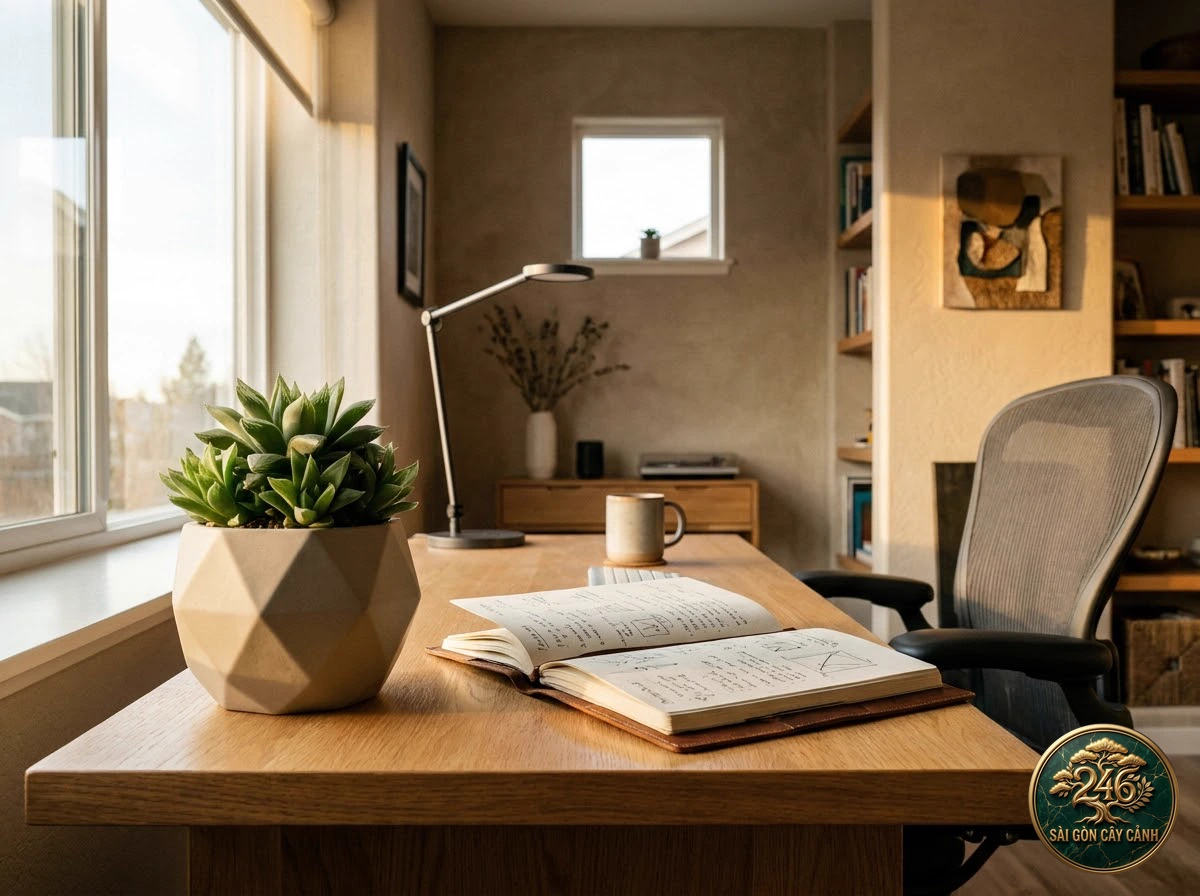
Haworthia retusa embodies the finest principles of modern geometric interior aesthetics. Its clean, structural profile pairs splendidly with square ceramic vessels, cubic matte charcoal planters, or honed terrazzo dishes. Positioned as a solitary focal accent upon minimalist metal workbenches or natural oak consoles, it projects quiet architectural authority, fostering mental clarity, sustained focus, and contemplation within contemporary urban homes.
Nursery Care Journal & Living Greenery Moments
At Saigon Cay Canh greenhouse, each photograph captures genuine everyday care moments between plant lovers and living greenery, spreading a passion for nature and green-living inspiration.

13. Frequently Asked Questions & Botanical Summary
Frequently Asked Question: Why are the flat triangular end-faces of my Haworthia retusa caving inward and deeply shriveling?
Expert Diagnosis from Saigon Cay Canh: Inward concavity of the terminal windows signals acute internal dehydration. This stems from either prolonged substrate desiccation or prior root rot from overwatering that destroyed the vascular feeder roots. Inspect the root zone: if the taproots are plump and pale, provide a thorough watering in breezy shade; if roots are decayed and mushy, excise all necrotic tissue, callus unpotted for a week, and reroot in lightly moistened fine pumice.
The geometric masterpiece Haworthia retusa stands as living testimony to South African botanical endurance, rigorously validated for home cultivation by the horticultural research team at Saigon Cay Canh.