
Living plant profile
Fan Aloe (Aloe plicatilis): Dichotomous Pachycaul Architecture, Distichous Foliage and Luxury Specimen Bonsai
Aloe plicatilis
Sai Gon Cay Canh • Living Herbarium V2 Fan Aloe (Aloe plicatilis): Dichotomous Pachycaul Architecture, Distichous Foliage and Luxury Specimen Bonsai Aloe plicatilis (Kumara plicatilis) represents the pinnacle of botanical sculpture, featuring a dichotomously branching pachycaul tree trunk crowned with elegant two-ranked, fan-like clusters of strap-shaped glaucous leaves. Record ID: SGCC-PLANT-00540 Scientific Name: Aloe plicatilis […]
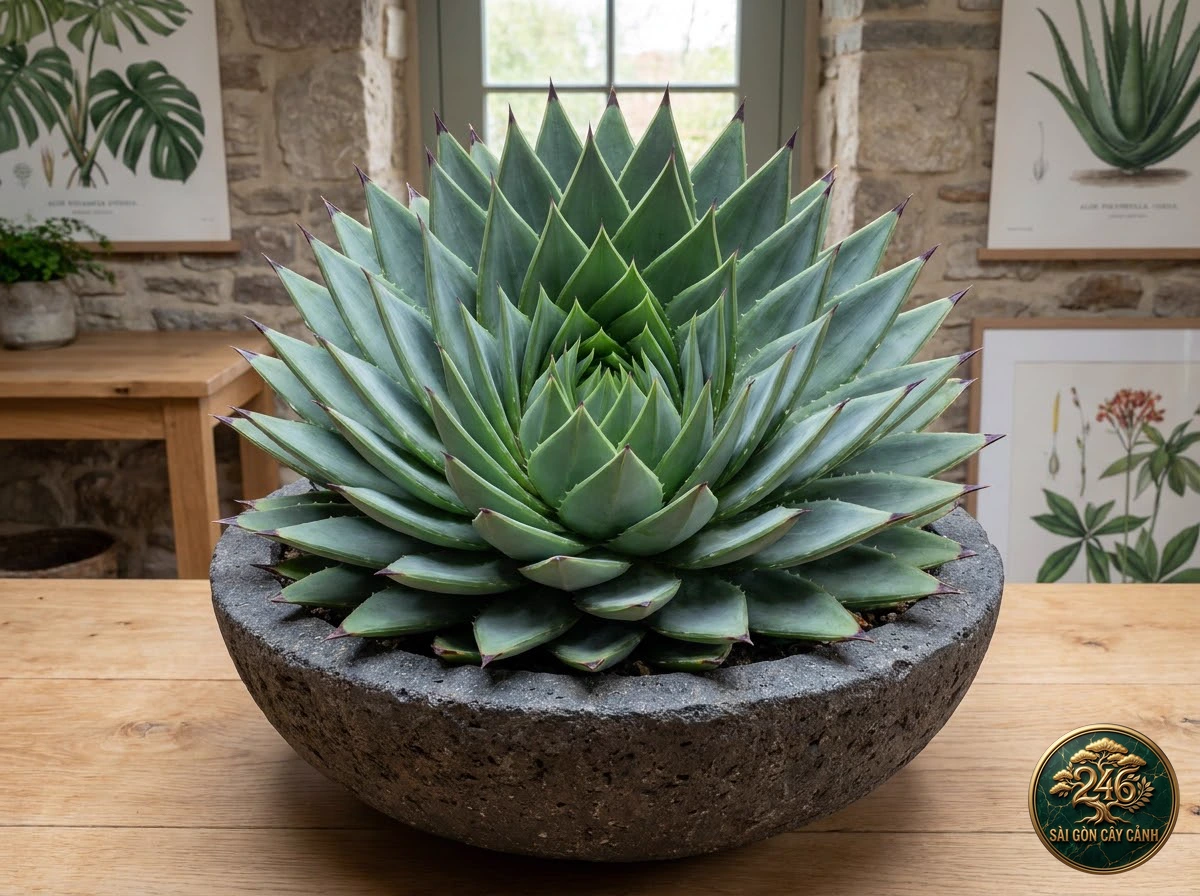
Fan Aloe (Aloe plicatilis): Dichotomous Pachycaul Architecture, Distichous Foliage and Luxury Specimen Bonsai
1. Botanical Morphology & Ecological Adaptations
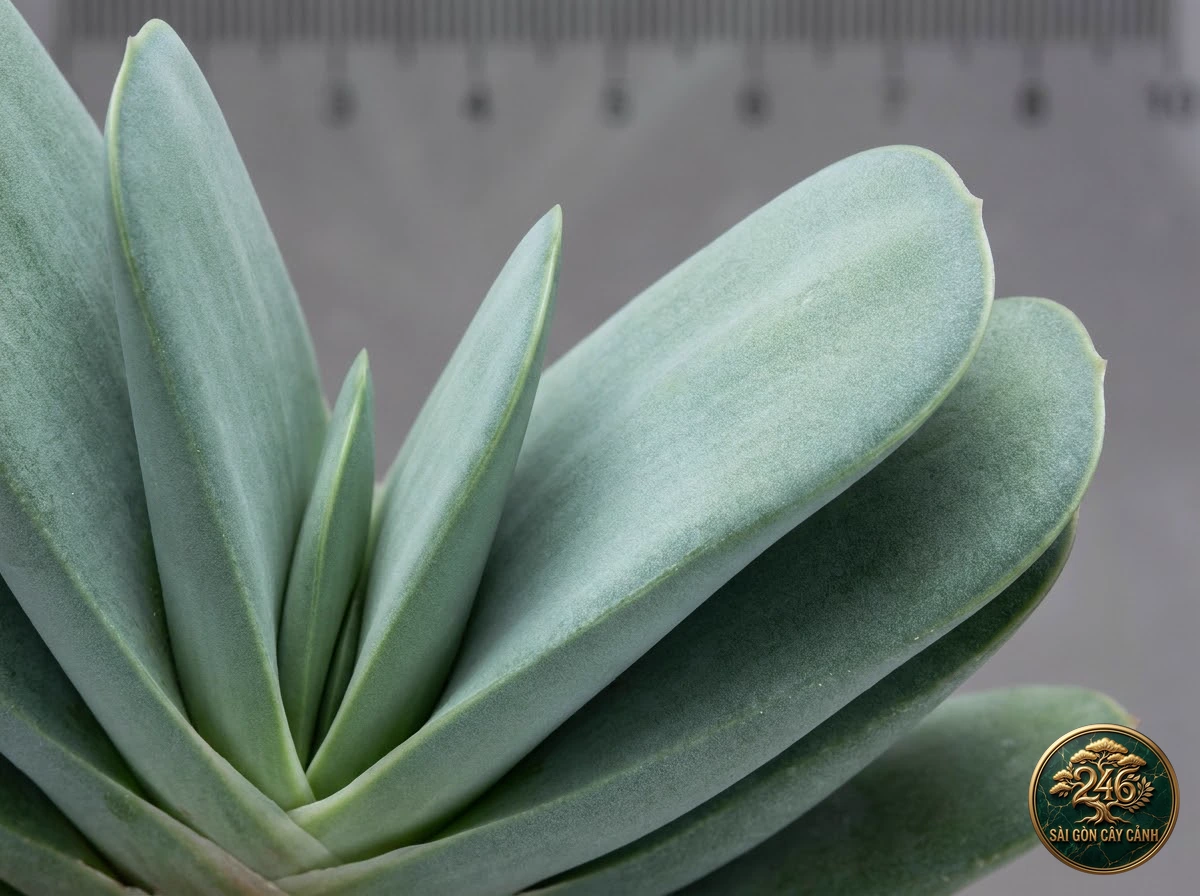
Aloe plicatilis, widely recognized under the vernacular name Fan Aloe, is a highly distinguished succulent perennial belonging to the family Asphodelaceae. Native to the ecologically diverse landscapes of Drakenstein & Franschhoek Mountains, Western Cape, this species has evolved sophisticated anatomical adaptations to endure severe seasonal droughts, rocky scree terrain, and fluctuating thermal regimes.
Aloe plicatilis (Kumara plicatilis – Fan Aloe) is a botanical masterpiece featuring flat strap-shaped succulent leaves arranged in opposing distichous ranks like an unfurled hand fan. The powder-blue leaves terminate in smooth rounded tips without menacing spines.
Unique dichotomously branching woody trunks clad in fire-resistant corky bark anchor deeply into sandstone mountain crevices. Solitary unbranched racemes carry brilliant tubular scarlet blossoms opening during late winter.
2. Taxonomic Chronicle & Botanical History
Aloe plicatilis (Fan Aloe) reigns as one of the most aristocratic, visually mesmerizing succulents on Earth. Carl Linnaeus first cataloged it in 1753 within Species Plantarum under the name Aloe disticha var. plicatilis, before Philip Miller elevated it to species status as Aloe plicatilis in 1768. The specific epithet plicatilis stems from Latin signifying folded like a fan, perfectly honoring its two-ranked distichous leaves arranged like an antique folding fan. Recognizing deep evolutionary divergences in dichotomous branching and perianth morphology, modern botanists restored it to the distinct genus Kumara as Kumara plicatilis (L.) Medicus, acknowledging its ancient paleo-endemic lineage.
3. Histological Specialization & CAM Photosynthetic Pathway
Morphological anatomy of Aloe plicatilis exhibits extraordinary evolutionary fusion between an arborescent pachycaul tree and a succulent xerophyte: its woody trunk branches through immaculate dichotomous (Y-forked) division, forming an antique domed canopy reaching 3 to 5 meters in habitat. Strap-shaped (lorate) glaucous-grey leaves feature rounded obtuse tips, devoid of vicious marginal spines, bearing only minute microscopic teeth near the apex. The strict two-ranked distichous fan arrangement minimizes aerodynamic drag against ferocious Franschhoek mountain gales, while thick suberized cork bark insulates the woody limbs against brushfires.
4. Comprehensive Care Compass (Care Compass 360°)
La bàn chăm sóc Sài Gòn Cây Cảnh
5. Diagnostic Pathology & Clinical Horticultural Interventions
The blunt leaf tips of Fan Aloe are sensitive to persistent humidity; apical necrosis flags poor air circulation within enclosed indoor quarters.
| Observed Physical Symptom | Etiological Factor / Pathology | Horticultural Intervention Protocol |
|---|---|---|
| Strap-shaped fan leaves sag limply, losing proud vertical alignment | Moisture deficit or root overheated by thin container exposed to blazing sun | Soak root ball deeply, insulate pot inside thick decorative ceramic cachepot |
| Blackened necrosis descends from woody branch apex into petiole | Stem dieback pathogen (Botrytis) triggered by stagnant moisture | Prune back to healthy white vascular tissue using sterilized shears, seal cut |
| Foliar fan margins develop crisp reddish-brown marginal desiccation | Direct mechanical draft from air conditioning or intense glass-focused sunbeam | Relocate away from convective AC vents, provide sheer linen curtain during midday |
| Basal leaves of fan turn golden-yellow, desiccate and shed leaving ring scar | Natural physiological leaf turnover revealing handsome woody pachycaul stem | No action needed; this normal process enhances the antique bonsai tree trunk |
6. Infrageneric Taxonomic Differentiation Matrix
The comparative table below details the singular taxonomic stature of Aloe plicatilis (Kumara plicatilis) against typical arborescent succulent aloes:
| Taxonomic Characteristic | Aloe plicatilis (Fan Aloe) | Comparative Counterpart A | Comparative Counterpart B |
|---|---|---|---|
| Branching Architecture | Symmetrical dichotomous (Y-forked) pachycaul woody limbs | Unbranched solitary arborescent columnar trunk | Irregular lateral branching with random suckering shoots |
| Phyllotaxis Configuration | Strictly two-ranked distichous fan arrangement | Multi-tiered radiating concentric rosette | Five-ranked geometric Fibonacci spiral |
| Foliar Morphology | Flattened strap-like leaves with rounded obtuse apex | Tapering lanceolate leaves armed with fierce teeth | Short stout deltoid fleshy succulent wedges |
| Aesthetic Status | Pinnacle living sculpture for high-end minimalist architecture | Fierce rugged xerophytic accent for desert themes | Delicate desktop living gem for intimate spaces |
7. Vegetative Propagation & Offsetting Protocols
Propagating Aloe plicatilis rewards disciplined horticultural precision via semi-woody branch truncheons or seed. When taking truncheons in temperate spring, select a mature dichotomous branch bearing a vigorous foliar fan, cutting cleanly through the woody stem with a sterilized saw. Seal the wound with pruning compound or sulfur, curing in warm dry shade for 10 to 14 days until fully callused. Insert into a porous medium of seventy percent pumice and thirty percent coarse river grit; maintain light moisture in buoyant airflow; active rooting establishes within 4 to 6 weeks.
8. Phytopathology & Integrated Pest Management
Aloe plicatilis evolved on windswept montane screes with winter rainfall; consequently, in humid tropical urban settings, its chief vulnerability is branch dieback and foliar anthracnose (Botrytis) favored by stagnant air. If fan leaves develop blackened basal margins or greyish necrotic patches, immediately excise diseased blades, disinfect wounds with povidone-iodine, and shift the specimen to a briskly ventilated outdoor perch. Flawless 3-second container drainage is imperative to keep roots healthy.
9. Companion Planting & Xerophytic Groupings
Within high-end botanical collections and minimalist architectural landscapes, Aloe plicatilis commands regal center stage alongside dramatic sculptural flora including Euphorbia tirucalli pencil trees, pristine Haworthia cymbiformis mats, and drought-hardy xerophytic ferns. The ethereal fan symmetry and antique dichotomous branching create an invaluable living sculpture that elevates the architectural prestige of any luxury residence.
10. Spatial Placement & Interior Architectural Styling
Aloe plicatilis stands as the absolute zenith of luxury succulent bonsai art and modern architectural interior styling. It achieves sublime elegance when presented as a solitary living masterpiece in broad shallow Japanese artisan stoneware, honed monolithic terrazzo planters, or antique unglazed terracotta urns. Showcased within penthouse atriums, prestigious reception pavilions, or grand minimalist living rooms, it projects refined discernment, authority, and timeless botanical culture.
11. Urban Apartment Microclimates & Architectural Cultivation
Aloe plicatilis represents the pinnacle of modern succulent bonsai styling, perfectly attuned to luxury penthouses, grand foyers, and minimalist terraces. House the specimen in wide, weighted unglazed stoneware to balance its proud dichotomously branching woody limbs.
Possessing the innate stature of a living bonsai sculpture, Aloe plicatilis deserves pride of place in high-end residential galleries, villa atriums, or designer terrace gardens. Pair with sophisticated matte-glazed ceramics or aged stone plinths to celebrate its twin-forked woody architecture. Ensure constant convective airflow and abundant bright diffused illumination throughout the daytime hours.
The immaculate fan phyllotaxis and sculptural dichotomous woody branching of Aloe plicatilis transform it into an esteemed living art statement within premier architectural settings. Embodying refined Wabi-Sabi aesthetics-celebrating organic authenticity, rugged endurance, and timeless poise-it anchors residential sanctuaries with understated luxury and serene permanence.
12. Domestic Pet Safety & Household Placement Guidelines
TOXIC TO COMPANION ANIMALS (ASPCA Alert) – Foliar sap contains active anthraquinones capable of causing gastrointestinal irritation in domestic animals.
While harmlessly spineless, its sap contains mild aloin; display this sculptural specimen on elevated pedestals to accentuate its fan geometry safely.
13. In-Depth Botanical Q&A with Sai Gon Cay Canh
Frequently Asked Question: Will my potted Fan Aloe form dichotomous Y-branches in a container, and how long does a new branch take to appear?
Expert Diagnosis from Saigon Cay Canh: Yes, absolutely! Dichotomous branching is the inherent genetic growth pattern of Aloe plicatilis. Following each successful flowering cycle (with inflorescences emerging from the center of the leaf fan), the apical meristem divides into two distinct growing tips, forming two separate fan heads upon a Y-forked woody limb. This process unfolds with deliberate grace: a potted specimen typically completes a dichotomous branching event every 2 to 3 years. Nurture it patiently with generous light and porous scree; you will witness ancient botanical architecture unfolding in your living room.
14. Nursery Botanical Journal & Green Sanctuary Notes
At Sai Gon Cay Canh, our mature Aloe plicatilis specimen commands continuous admiration from architectural landscape designers. Its immaculate two-ranked fans crowning gnarled Y-forked branches project timeless natural dignity.
At the Sai Gon Cay Canh living collection, mature potted specimens of Aloe plicatilis with weathered corky trunks and upright powder-blue fan leaves evoke profound admiration among bonsai masters and collectors. The plant radiates a tranquil, noble, and meditative aura.
15. Seasonal Mineral Nutrition & Micro-Nutrient Management
Nutritional management for Fan Aloe emphasizes trace minerals while safeguarding flawless root-zone porosity. Apply dilute organic liquid feed bi-monthly during active seasons, mulching the surface with volcanic pumice to keep fan blades elevated from soil.
Evolving across impoverished, slightly acidic sandstone mountain screes, Fan Aloe relishes potting media amended with red volcanic scoria, pumice, and aged coco coir peat. Fertilize very sparingly: deliver ultra-dilute organic liquid plant food once every three months to sustain compact architectural lignification.
16. In-Situ Conservation Status & Ethical Botanical Stewardship
Kumara plicatilis is a treasured paleo-endemic of Franschhoek mountain shelves with finite wild numbers. Sai Gon Cay Canh propagates strictly via mature cultivated branch truncheons, upholding unwavering preservation of this aristocratic botanical heritage.
Wild populations of Aloe plicatilis (Kumara plicatilis) across the Franschhoek range are strictly conserved within South African provincial reserves. Sai Gon Cay Canh propagates specimens exclusively from long-established nursery stock, championing the preservation of these relictual botanical treasures.
17. Native Habitat Ecology & Environmental Stress Physiology
Aloe plicatilis (modernly classified within its own segregated genus as Kumara plicatilis – Fan Aloe) represents an ancient, relictual lineage within arborescent succulent flora. It is endemic exclusively to rugged sandstone slopes of the southwestern Cape mountains (including Franschhoek, Du Toitskloof, and Elandskloof) at elevations between 800 and 1,300 meters. Its wild ecosystem is the montane fynbos belt, receiving copious winter rains (up to 1,500 mm annually) followed by bone-dry, windswept summers. Water filters rapidly through acidic, highly porous Table Mountain sandstone clefts with pH values between 5.0 and 6.5.
The paramount evolutionary signature of Aloe plicatilis is its dichotomously branching woody habit: terminal branches systematically divide into twin forks, creating an umbrella-like architectural crown reaching 3 to 5 meters tall. Flat, strap-like succulent leaves of a serene powder-blue hue arrange strictly in two opposing distichous ranks resembling an unfurled Japanese hand fan, delightfully free of marginal spines. Thick, fire-resistant corky bark insulates the trunk against natural fynbos wildfires. In high-end architectural styling and living collections, Fan Aloe stands as an enduring emblem of classical elegance, botanical antiquity, and sculptural majesty.
Nursery Care Journal & Living Greenery Moments
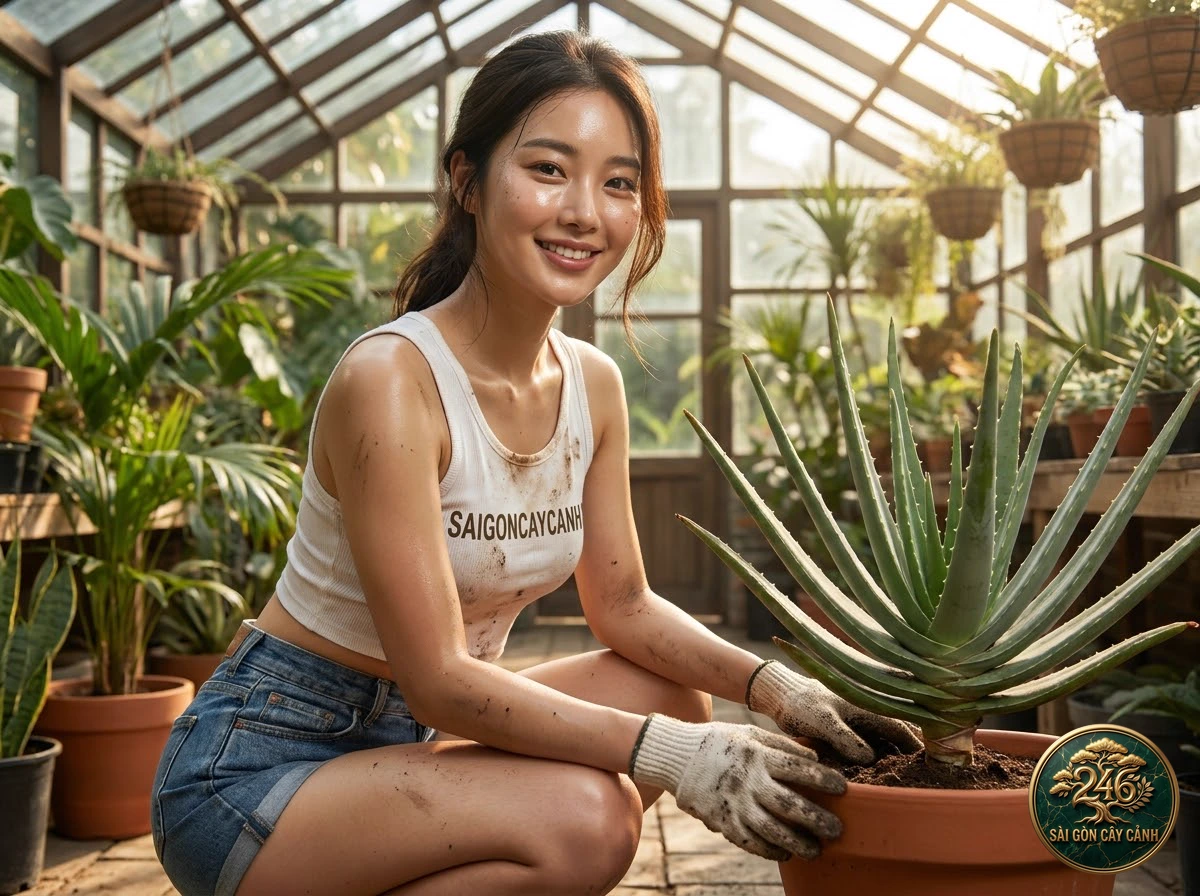
At Saigon Cay Canh greenhouse, each photograph captures genuine everyday care moments between plant lovers and living greenery, spreading a passion for nature and green-living inspiration.
18. Concluding Horticultural Appraisal
This authoritative monograph on Aloe plicatilis by Sai Gon Cay Canh honors the summit of living botanical sculpture, delivering enduring architectural inspiration to contemporary living spaces.
Aloe plicatilis (Kumara plicatilis) exemplifies natural architectural mastery through its pristine hand-fan phyllotaxis and majestic dichotomous branching limbs. The graceful contour of its spineless glaucous blades radiates noble, relictual poise. Sai Gon Cay Canh takes profound pride in curating and sharing this irreplaceable botanical heritage with collectors dedicated to timeless living art.