Living plant profile
Painted caladium
Caladium picturatum
Comprehensive botanical dossier for Painted caladium (Caladium picturatum). Identification, lighting calibration, porous substrate formulation, and cultivation guide by Saigon Cay Canh.
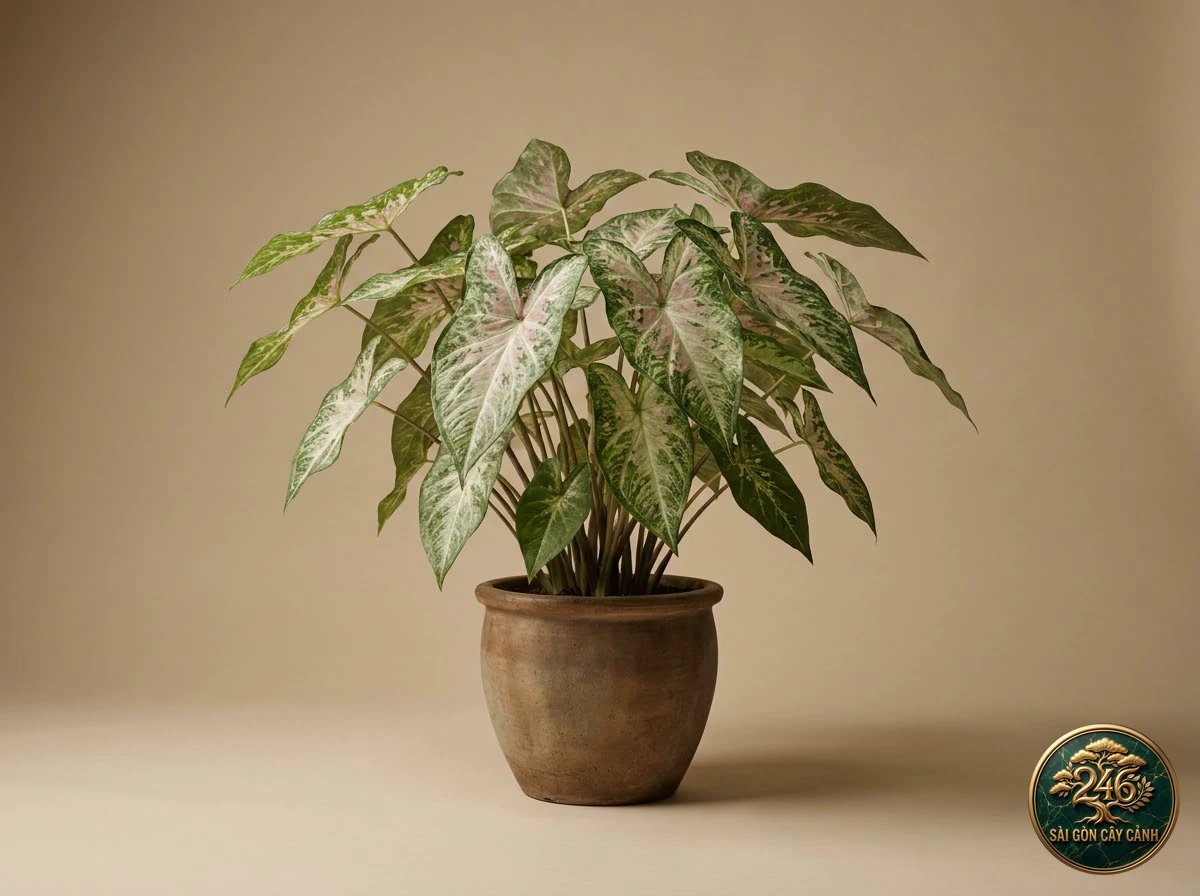
Painted caladium (Caladium picturatum) is an exceptional Amazonian botanical treasure distinguished by its slender, lance-shaped hastate leaves that diverge strikingly from common rounded caladiums. Splashed with an artistic mosaic of ruby pink, olive green, and creamy white across elongated blades, this species brings graceful tropical elegance to indoor collections.
1. Core Botanical Taxonomy & Cultural Specifications
| Scientific Name | Caladium picturatum |
|---|---|
| Botanical Family | Araceae (Aroid Family) |
| Native Distribution | Amazonian tropical rain forests across central and northern Brazil, Colombia, and Peru |
| Growth Demeanor | Tuberous geophyte producing elongated hastate-lanceolate leaves with spreading basal lobes |
| Lighting Threshold | Bright filtered daylight (1,800 – 3,000 lux); avoid scorching unfiltered sun |
| Hydration Cadence | Consistently moist during active season; suspend watering when foliage collapses for dormancy |
| Substrate Formulation | 35% medium pumice, 25% fine pine bark, 20% coarse perlite, and 20% washed coco coir |
| Thermal Range | 22°C – 31°C (72°F – 88°F; vegetative vigor ceases below 17°C/62°F) |
| Relative Humidity | 70% – 85% (High ambient humidity prevents marginal curling and foliar crisping) |
| Cultivation Difficulty | Moderate (Requires calibrated seasonal irrigation and warm microclimate management) |
| Pet Safety Profile | Toxic (Contains insoluble calcium oxalate raphide crystals harmful to pets) |
Formally accepted in the global taxonomic catalog of Kew Gardens (POWO), Caladium picturatum occurs naturally across Amazonian floodplains spanning central Brazil, Peru, and Colombia. Thriving along humid forest clearings and riparian margins, it benefits from dappled sunlight filtered through forest canopies and seasonal flood moisture.
Subterranean tubers are subglobose to ovoid with dark brown fibrous bark rich in starch reserves. This geophytic adaptation guarantees botanical survival through severe equatorial droughts, sustaining cellular viability beneath seasonal leaf litter.
With the advent of warm rains, slender purplish-stippled petioles shoot upward rapidly from apical tuber eyes, unfolding narrow lanceolate blades into an airy canopy thirty to fifty centimeters high.
2. Morphological Identification & Foliar Architecture
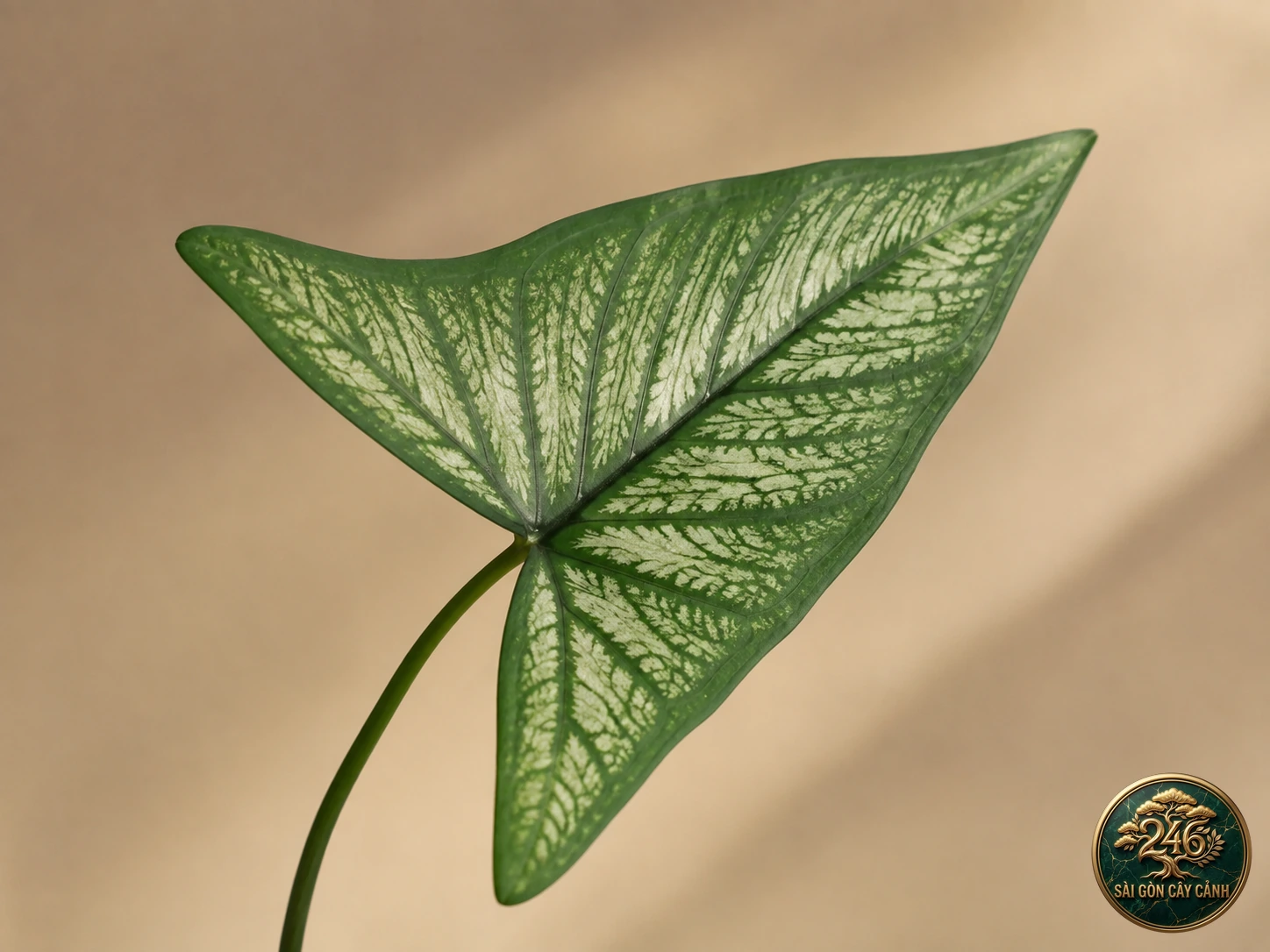
The foliage of Caladium picturatum features an unmistakably elongated hastate-lanceolate form measuring 20 to 35 cm in length yet only 5 to 10 cm across. Two acute basal lobes flare outward horizontally, reminiscent of a swallow’s wings poised in flight.
Lamina coloration presents a natural symphony with a rosy-carmine or magenta midrib flanked by silvery white patches, enclosed within undulating deep olive-green margins. The tissue is thin yet supple, holding its slender posture aloft with poised grace.
The slender hastate-lanceolate blade architecture of Caladium picturatum represents a biomechanical adaptation that minimizes aerodynamic drag during violent Amazonian rainstorms. Adaxial epidermal cells contain a mosaic of carotenoids and anthocyanins that yield picturesque mottled splashes, deflecting harmful radiation while capturing photosynthetically active photons.
3. Photometric Calibration & Window Exposure Optimization
Diffused illumination between 1,800 and 3,000 lux represents the optimal optical threshold for Painted caladium. Its narrow blades absorb photons efficiently but transpire rapidly if subjected to direct sun rays or excessive heat radiation.
Staging containers approximately one to two meters back from sheer-draped windows provides protective filtration, preserving vibrant magenta midribs and silvery intercostal splashes throughout active months.
The light saturation threshold for Painted caladium occurs at roughly 120 umol/m2/s. Narrow hastate blades borne atop flexibly angled petioles capture low-angle morning rays efficiently while avoiding excessive solar heat absorption during midday hours.
4. Geophytic Tuber Dynamics & Dormancy Phenology
Throughout active growth, maintain consistent capillary moisture that drains freely. Irrigate thoroughly when the upper two centimeters dry out, always utilizing room-temperature water to prevent thermal shock to subterranean rootlets.
When outer foliage shows seasonal senescence in late autumn, systematically reduce irrigation and withhold water entirely once leaves collapse, ensuring safe tuber rest.
The physiological comfort envelope extends from 22°C to 31°C. Thermal drops below 17°C dramatically depress metabolic activity, prompting the plant to withdraw foliage to conserve energy.
Atmospheric humidity should range from 70% to 85%. The narrow foliage curls prematurely when ambient humidity plummets below 55%; cluster with other foliage plants atop gravel humidity trays to foster a microclimate.
Tropical monsoonal lowlands provide warm, humid ambient conditions that foster vigorous petiole flushes in Caladium picturatum. During seasonal monsoon deluges, position containers under sheltered, airy verandas to shield the tuber crown from mechanical erosion.
5. Engineered High-Porosity Substrate Formulation
Substrate for Painted caladium requires elevated air porosity, formulated from 35% medium pumice, 25% fine pine bark, 20% coarse perlite, and 20% washed coco coir pith. This aggregate blend guarantees free water egress without bottom accumulation.
A buffered pH range between 5.6 and 6.5 enables efficient uptake of chelated trace elements.
A coarse mineral-rich substrate blend containing pumice and perlite stimulates radial root expansion around the subterranean tuber. Atmospheric air circulating through aggregate crevices keeps the tuber cortex aerated and fungal-resistant, providing steady physical support for soaring petioles.
6. Organic Bio-Fertilization & Mineral Management
Supply diluted organic liquid nutrition monthly during active flushes to maintain petiole stiffness and chromatic contrast. Prioritize formulas with elevated potassium and micronutrients over high nitrogen.
Suspend nutrient applications entirely during winter tuber dormancy to prevent chemical damage to resting tuber skin.
Administering fermented soybean amino acids combined with fulvic acid ensures rapid mineral absorption across the fibrous root system of Painted caladium without harmful saline accumulation. Bi-monthly applications of organic potassium carbonate bolster tensile flexibility along slender petioles.
7. Clinical Diagnostic Matrix & Horticultural Resolutions
| Clinical Symptom | Root Pathology | Diagnostic Method | Targeted Resolution |
|---|---|---|---|
| Crisp, scorched margins along slender blades | Intense direct sunlight or ambient humidity deficit | Relocate into bright filtered daylight and maintain relative humidity >70% | Foliar aesthetic degradation |
| Synchronized foliar dieback in late autumn | Natural seasonal tuber dormancy initiation | Prune withered foliage, withhold irrigation, store container dry | Normal biological phenology |
| Elongated, flimsy petioles with washed-out color | Insufficient diffused illumination below 1,000 lux | Move closer to bright window receiving at least 2,000 lux diffused light | Etiolation stress |
| Soft, foul-smelling subterranean tuber | Waterlogged medium inducing fungal or bacterial decay | Excise rotting tissue, sanitize healthy tuber sections, repot in porous mix | Lethal tuber loss |
8. Pest Mitigation Protocols & Foliar Sanitation
Potential pests include mealybugs tucked within basal petiole sheaths and spider mites beneath blades during dry periods. Inspect leaf axils regularly and cleanse with mild botanical soap sprays.
Bacterial or fungal tuber rot arises strictly from compacted, soggy media; unrestricted bottom aeration prevents infection.
The elongated lanceolate blades gather airborne domestic particulates in closed apartments. Rinsing both blade surfaces with fine morning mist followed by gentle air convection ensures complete droplet evaporation before midday warmth initiates.
9. Asexual Propagation Methodology
Propagate by harvesting daughter tubers or sectioning mother tubers in early spring as eyes awaken. Use a sterilized blade to divide tuber sections bearing viable eyes, allowing cuts to callous in shade for a day before potting.
Bury divisions three to four centimeters deep in warm, moist porous mix, maintaining ambient warmth to stimulate rapid vernal sprouting.
Foliar hygiene requires morning misting with fine water droplets to rinse airborne dust from narrow blades. Prune spent outer foliage cleanly using shears sanitized with rubbing alcohol to remove potential shelters for opportunistic pests.
10. Veterinary Toxicology & Domestic Safety Safeguards
Place planters upon high shelves or pedestals out of reach of curious household pets.
11. Biophilic Interior Design & Architectural Styling
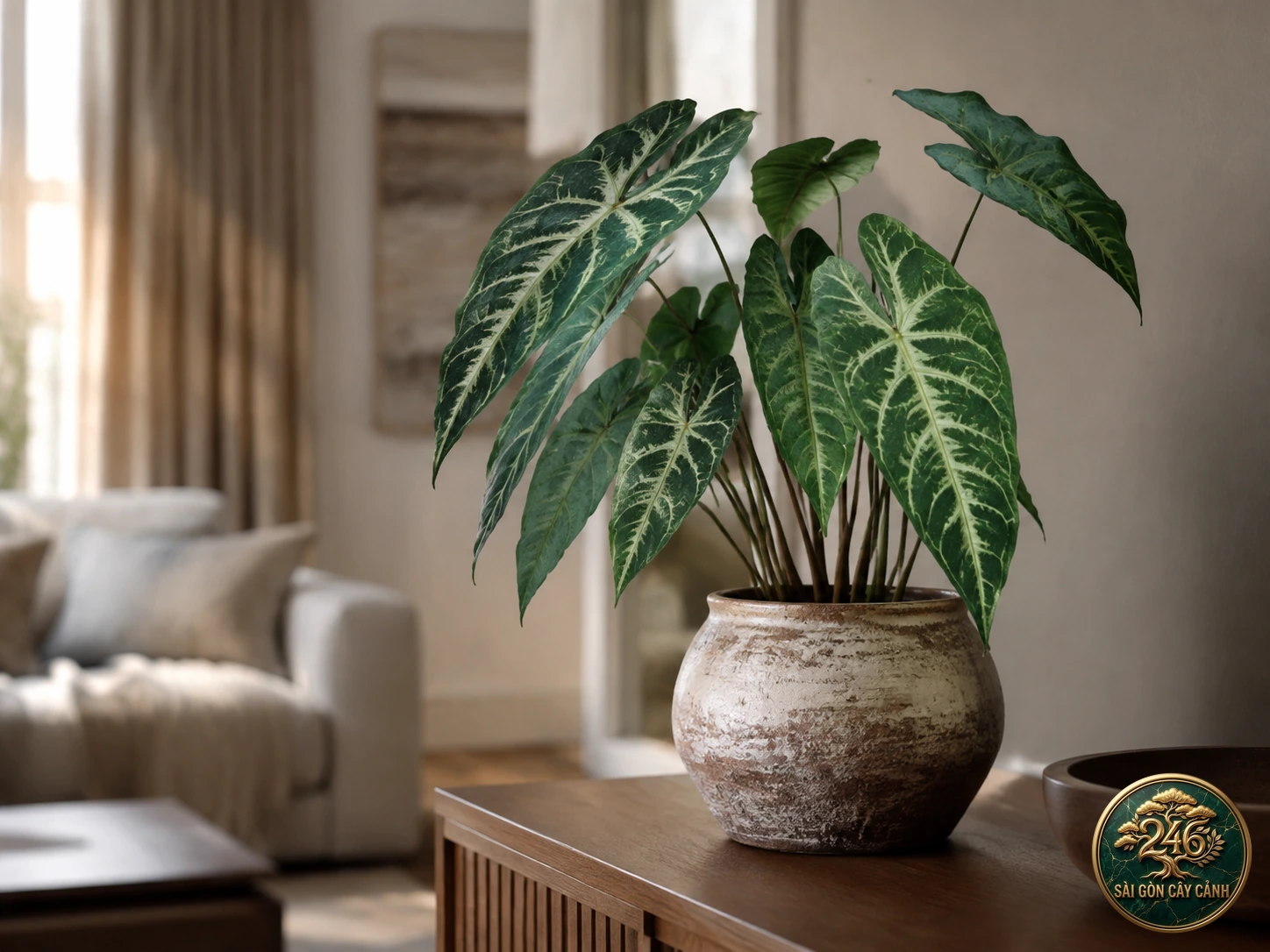
The slender hastate silhouette of Painted caladium injects graceful modern flair into contemporary tropical interiors. It shines atop executive desks, bookshelves, or accent pedestals in matte black or textured cement planters.
Its soaring, spear-shaped canopy provides an airy vertical visual dynamic that softens rigid architectural lines in urban apartments.
In modern tropical architectural settings, Painted caladium introduces singular airy grace when potted in minimalist matte graphite or cement planters. Its spear-shaped foliage flaring outward like swallow wings adds dynamic organic movement that softens rigid interior corners.
12. Master Cultivation Axioms
Three master horticultural axioms for sustaining vigorous Painted caladium specimens:
- Hydration axiom: Maintain porous moisture during active vegetative flushes and halt irrigation entirely during dormancy to protect tubers.
- Illumination axiom: Deliver bright diffused daylight between 1,800 and 3,200 lux, avoiding harsh midday sun to shield slender foliage.
- Sanitation axiom: Sustain ambient relative humidity above 70% and temperatures above 22°C (72°F) to preserve pristine foliar turgor.
13. Frequently Asked Botanical Questions (FAQs)
What is the primary difference between Caladium picturatum and Caladium bicolor?
Caladium picturatum exhibits narrow, elongated hastate-lanceolate leaves with spreading acute basal lobes, whereas Caladium bicolor bears broad, rounded heart-shaped peltate leaves.
Does this species undergo annual tuber dormancy?
Yes. As a geophyte with subterranean tubers, it drops its foliage and rests for two to three months during cold/dry seasons before awakening in spring.
How do I prevent long petioles from drooping or snapping?
Deliver bright diffused light above 2,000 lux and provide potassium-calcium nutrition to reinforce petiole cellular turgor and mechanical strength.
Can Painted caladium be grown semi-hydroponically in LECA?
During active vegetative growth, semi-hydroponics in well-aerated LECA is feasible; however, tubers must be lifted and dried during seasonal dormancy to prevent rotting.
Does sap contact cause skin irritation?
Plant sap contains microscopic calcium oxalate raphides that may induce mild tingling or itching on sensitive skin; wearing protective gloves during division is advised.
What maximum blade length can Caladium picturatum attain indoors?
Under optimized indoor conditions with humidity exceeding 70% and airy substrates, lanceolate blades achieve lengths of 30 to 45 cm while maintaining a slender width of only 6 to 10 cm, producing exceptionally graceful proportions.